



What's Happening?
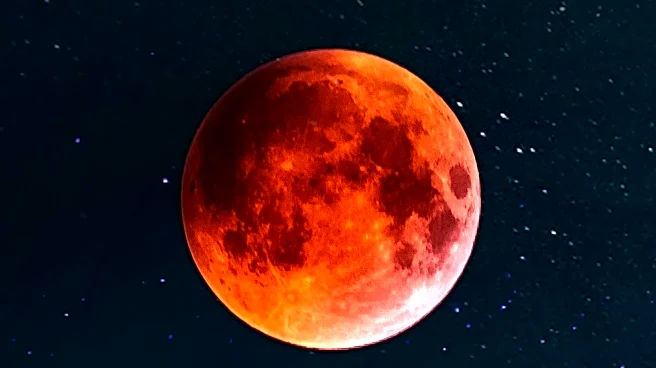
The year 2026 is set to be a remarkable one for moon enthusiasts, with a series of significant celestial events lined up. The first major event is the Wolf Moon on January 3, which will be a supermoon, appearing larger and brighter due to its proximity to Earth. This is the first of three supermoons in 2026. Additionally, a 'ring of fire' annular solar eclipse is scheduled for February 17, visible primarily from research stations in Antarctica. A total lunar eclipse, known as a 'blood moon,' will occur on March 2-3, visible from parts of western North America and other regions. These events offer unique opportunities for skywatchers to witness and appreciate the beauty of the moon and its interactions with the Earth and sun.
Why It's Important?
These celestial events
provide valuable opportunities for scientific observation and public engagement with astronomy. Supermoons and eclipses captivate the public's imagination, fostering interest in space science and exploration. They also offer educational opportunities for schools and science centers to engage with the community. The visibility of these events across different regions highlights the global nature of astronomical phenomena, encouraging international collaboration in scientific research. For amateur astronomers and enthusiasts, these events are a chance to deepen their understanding of the cosmos and share their passion with others.