





What's Happening?
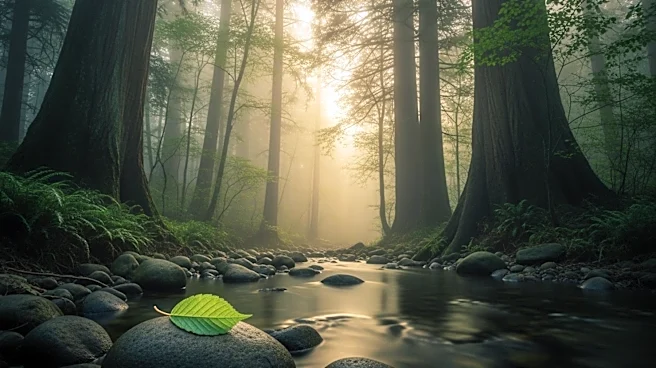
The documentary film 'Humboldt USA,' directed by G. Anthony Svatek, explores the changing relationship between humans and nature in the United States through the lens of Alexander von Humboldt, a German naturalist. The film travels across various U.S.
locations, including redwood forests and urban areas, to depict how Humboldt's vision of interconnectedness is reflected in modern environmentalism. The documentary premiered at the Visions du Réel festival in Switzerland and is set for a U.S. premiere at the Museum of the Moving Image. Svatek's work highlights the complexities of environmentalism and the impact of technological advancements on nature.
Why It's Important?
The film's exploration of interconnectedness in nature is significant as it addresses contemporary environmental challenges and the historical context of ecological thought. By revisiting Humboldt's ideas, the documentary prompts reflection on current environmental policies and practices. It underscores the importance of understanding the interconnectedness of ecosystems, which is crucial for addressing climate change and promoting sustainable development. The film also highlights the cultural and historical impact of Humboldt's work in the U.S., offering insights into how past ideas can inform present and future environmental strategies.
What's Next?
Following its premiere, 'Humboldt USA' will likely engage audiences in discussions about environmentalism and the role of historical figures in shaping ecological thought. The film may inspire further exploration of Humboldt's contributions and their relevance to modern environmental issues. Additionally, it could influence filmmakers and environmentalists to create more content that bridges historical perspectives with contemporary challenges, fostering a deeper understanding of the human-nature relationship.