






What's Happening?
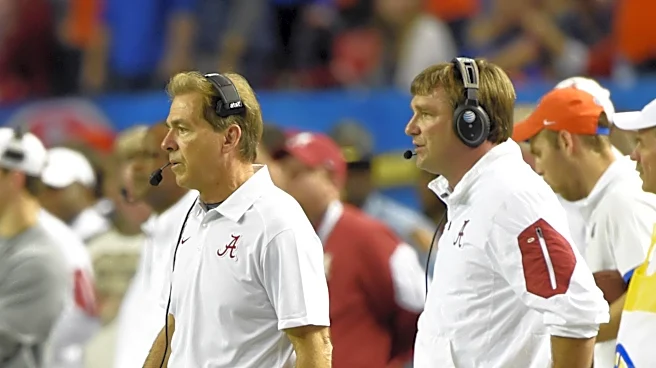
The debate over the most compelling era of college football has been reignited, with figures like Georgia head coach Kirby Smart reflecting on the dominance of Alabama teams in the early 2010s. Smart argues that these teams, with their deep rosters and
rigorous practice regimes, would outperform current teams. This discussion highlights changes in college football, including roster construction and the impact of relaxed transfer rules. Others, like Josh Pate, suggest the 1990s were the sport's golden era, emphasizing the differences in media and competition structures compared to today.
Why It's Important?
This debate underscores the evolving landscape of college football, where changes in rules and structures have altered the competitive balance. The increased parity in the sport, facilitated by relaxed transfer rules and expanded playoffs, allows more schools to compete for national championships. This shift has significant implications for recruitment, team strategies, and the overall appeal of college football. Understanding these dynamics is crucial for stakeholders, including coaches, players, and fans, as they navigate the sport's future.
Beyond the Headlines
The discussion about college football's most compelling era also touches on broader cultural and technological shifts. The absence of social media and the college football playoff in the 1990s created a different fan experience, one that some argue was more authentic. The current era, with its emphasis on media coverage and commercial interests, reflects broader societal changes. This evolution raises questions about the sport's identity and the values it promotes, offering insights into the intersection of sports, culture, and technology.