

What's Happening?
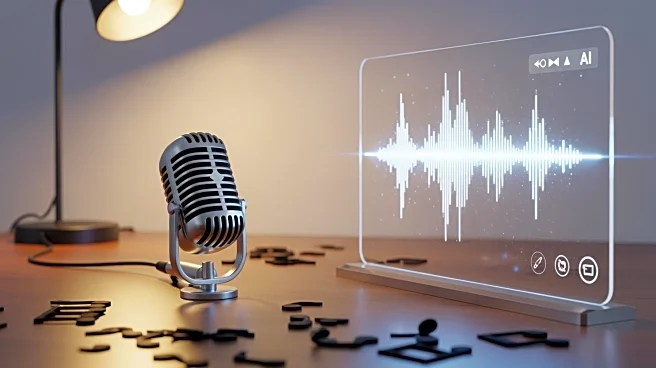
The evolution of advertising jingles, once a staple of American marketing, is facing a new challenge with the advent of AI-generated music. Historically, jingles like the Pepsi-Cola tune from 1942 became cultural phenomena, but the industry has shifted towards shorter, more mnemonic sounds. Recent developments in AI, such as tools from OpenAI, Suno, and Google, are capable of generating music, raising questions about the future of human composers in advertising. While AI can produce jingles, experts argue that it lacks the emotional depth and memorability of human-created music. Despite AI's potential, current technology struggles to replicate the 'human touch' that makes jingles memorable.
Why It's Important?
The potential for AI to automate jingle creation poses
a significant threat to musicians who rely on advertising work. As AI technology advances, it could reduce opportunities for human composers, impacting their livelihoods. This shift could also affect the quality of advertising music, as AI struggles to evoke the same emotional responses as human compositions. The broader implications extend to the advertising industry, which may face challenges in maintaining consumer engagement with AI-generated content. The debate highlights the tension between technological innovation and the preservation of human artistry in music.
What's Next?
As AI technology continues to develop, advertising agencies may increasingly experiment with AI-generated jingles, particularly in early-stage testing. However, the final production of jingles may still rely on human composers to ensure authenticity and emotional resonance. Companies like Liberty Mutual are already using AI for preliminary versions of commercials, indicating a potential shift in industry practices. The future of jingle writing will likely involve a blend of AI and human creativity, with ongoing discussions about the ethical and economic implications of AI in the music industry.
Beyond the Headlines
The rise of AI in music creation raises ethical questions about the value of human creativity and the potential loss of cultural heritage in advertising. Jingles have historically been a reflection of societal trends and consumer culture, and their evolution with AI could alter this dynamic. The challenge lies in balancing technological efficiency with the preservation of artistic expression. As AI becomes more prevalent, there may be a need for new regulations and standards to protect the interests of human composers and ensure the continued cultural relevance of advertising music.