
What's Happening?
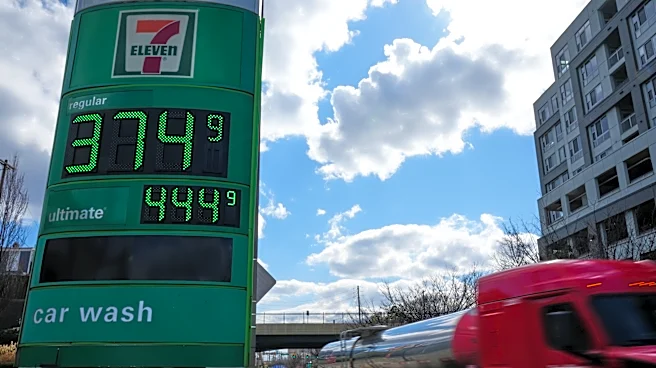
The U.S. Labor Department has reported a significant increase in wholesale prices, with the producer price index rising 0.5% from February and 4% from March 2025. This surge is largely attributed to the escalating
energy costs driven by the ongoing conflict in Iran. Energy prices alone have increased by 8.5% from February. The rise in wholesale prices presents challenges for the Federal Reserve, which faces pressure from President Trump to lower interest rates. However, some policymakers are considering rate hikes to counteract the inflation threat posed by higher energy costs.
Why It's Important?
The increase in wholesale prices is a critical indicator of potential consumer inflation, which could affect purchasing power and economic stability. The Federal Reserve's response to these inflationary pressures will be closely watched, as it balances the need to control inflation with the political pressure to maintain low interest rates. The situation underscores the broader economic impact of geopolitical conflicts, particularly in regions critical to global energy supply. The rising energy costs could lead to increased production costs across various industries, affecting both domestic and international markets.
What's Next?
The Federal Reserve's upcoming decisions on interest rates will be pivotal in managing inflationary pressures. Policymakers may need to weigh the benefits of rate hikes against potential economic slowdown. Additionally, the ongoing conflict in Iran and its impact on energy prices will continue to be a focal point for economic analysts and stakeholders. The situation may also influence political discourse, particularly in the context of upcoming midterm elections, where economic issues are likely to be prominent.