



What's Happening?
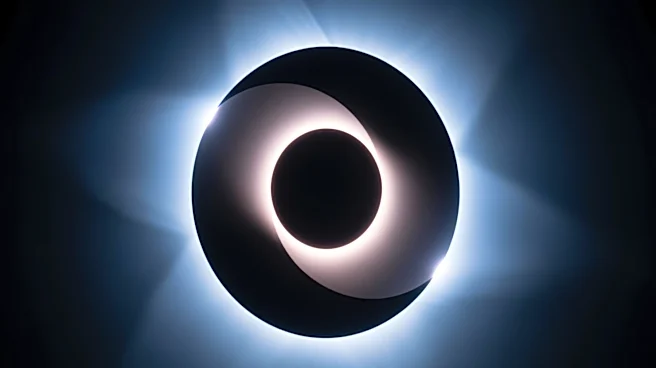
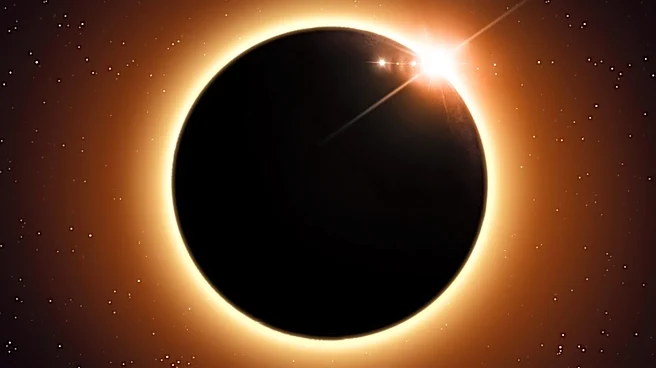
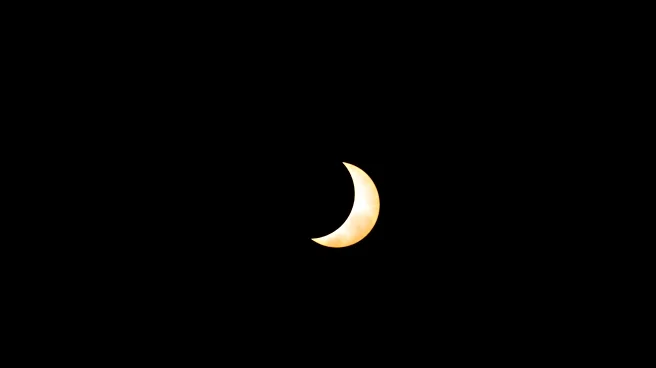
A personal account of witnessing a total solar eclipse has highlighted the profound impact such celestial events can have on individuals. The author describes their experience of seeing the Great American Eclipse in 2017 and a subsequent eclipse in 2024
in Mexico. These events have sparked a deep appreciation for the universe and have led the author to become an 'eclipse hunter,' planning future trips to witness more eclipses. The narrative underscores the unique and awe-inspiring nature of total solar eclipses, which have historically been viewed as significant astronomical phenomena.
Why It's Important?
The fascination with solar eclipses and the growing community of 'eclipse hunters' reflect a broader interest in astronomy and space exploration. This interest can drive educational initiatives and public engagement in science, fostering a greater appreciation for scientific research and discovery. Additionally, the tourism industry benefits from eclipse events, as they attract travelers to specific locations, boosting local economies. The cultural and scientific significance of eclipses also highlights the importance of preserving dark skies and natural environments for future generations to experience these phenomena.
What's Next?
With upcoming total solar eclipses scheduled for 2026 and 2027, there is likely to be increased interest and travel to locations where these events will be visible. This could lead to further growth in the niche market of eclipse tourism, with travel agencies and tour operators offering specialized packages. Additionally, educational institutions and scientific organizations may use these events as opportunities to engage the public in astronomy and promote scientific literacy. The continued fascination with eclipses may also inspire advancements in astronomical research and technology.