
What's Happening?
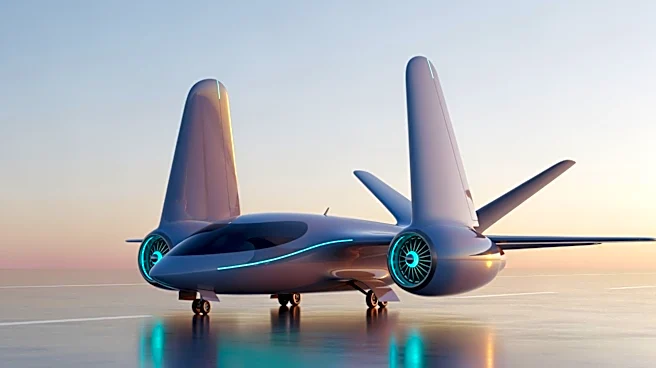
AIRO Group Holdings, along with its brand Jaunt Air Mobility, has introduced a full-scale autonomous Vertical Take-Off and Landing (VTOL) aircraft at the AUVSI XPONENTIAL 2026 event. This aircraft is designed
for defense, government, and dual-use cargo operations, marking a significant advancement in heavy-lift, hybrid-electric aviation. The aircraft is engineered to function in environments with limited infrastructure, where traditional aviation solutions are not feasible. It features a slowed rotor architecture that combines vertical lift with efficient forward flight, providing reliable and scalable capabilities across various missions. The development is currently in the detailed design and engineering phase, with the first flight expected by the end of the year and commercialization targeted for 2027. The aircraft's hybrid-electric propulsion system supports extended range and operational flexibility, while its modular design allows for mission adaptability in both government and commercial applications.
Why It's Important?
The unveiling of AIRO's hybrid-electric VTOL aircraft represents a pivotal development in the aviation industry, particularly for operations in remote and infrastructure-limited areas. This innovation could significantly impact logistics, humanitarian efforts, and intelligence missions by providing a versatile and efficient alternative to traditional aircraft. The aircraft's ability to operate in diverse environments and its modular design for different mission configurations could lead to enhanced operational capabilities for both government and commercial sectors. This development also underscores the growing trend towards sustainable and flexible aviation solutions, which could drive further advancements in hybrid-electric technology and its applications.
What's Next?
AIRO Group plans to conduct the first flight of the VTOL aircraft by the end of the year, with commercialization and operational deployment aimed for 2027. As the development progresses, stakeholders in the defense, government, and commercial sectors may begin to evaluate the potential integration of this technology into their operations. The success of this aircraft could prompt further investment in hybrid-electric aviation technologies and encourage other companies to explore similar innovations. Additionally, regulatory bodies may need to consider new frameworks to accommodate the unique capabilities and operational requirements of such advanced aircraft.