



What's Happening?
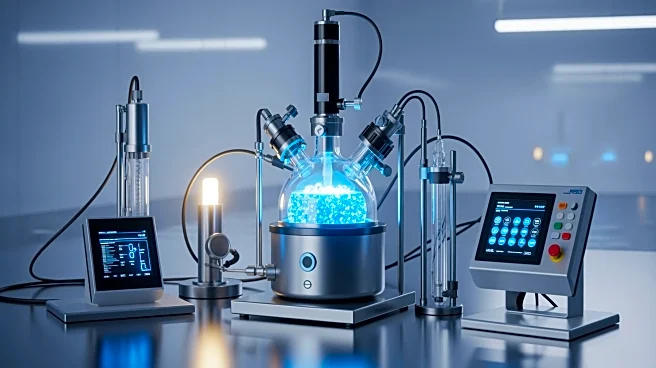
Sygnature Discovery, a prominent research organization, has successfully employed the Syrris Asia Flow Chemistry System to enhance the safety and efficiency of chemical reactions. The system was used to synthesize a nitroarene with an acid-sensitive functional
group and to safely conduct the reaction of neopentyl iodide with t-butyllithium. Raminder Mulla, Lead Scientist at Sygnature Discovery, highlighted the advantages of using the Asia system, which allowed for greater control over the chemical processes compared to traditional batch reactors. This approach not only reduced costs but also minimized risks associated with hazardous reactions. The system's capabilities, such as a syringe pump and adaptable modules, facilitated the scale-up of reactions that were previously challenging due to safety concerns.
Why It's Important?
The adoption of the Syrris Asia Flow Chemistry System by Sygnature Discovery represents a significant advancement in chemical research and safety. By enabling safer and more controlled chemical reactions, this technology reduces the risk of accidents and potential detonations, which are common concerns in traditional batch processing. This development is crucial for the pharmaceutical and chemical industries, where safety and efficiency are paramount. The ability to scale up reactions safely can lead to more cost-effective production processes and potentially accelerate the development of new compounds and drugs. This innovation could set a precedent for other research institutions and companies to adopt similar technologies, enhancing overall industry safety standards.
What's Next?
Following the successful implementation of the Syrris Asia system, Sygnature Discovery may continue to explore further applications of flow chemistry in their research. This could involve expanding the range of chemical reactions performed using this technology, potentially leading to new discoveries and innovations. Other companies in the chemical and pharmaceutical sectors might also consider adopting similar systems to improve their processes. Regulatory bodies could take note of these advancements and potentially update safety guidelines to encourage the use of safer, more efficient technologies in chemical manufacturing.