








What's Happening?
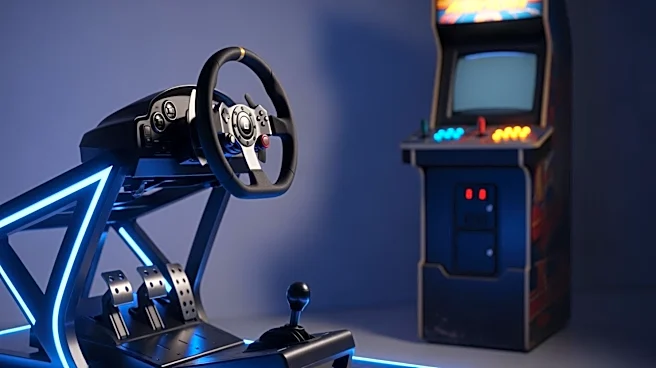
Sim racing has seen a significant increase in popularity, with player counts growing by over 1000% in the last decade. This surge has coincided with a decline in the arcade racing genre, which was once a staple in the gaming industry. The shift towards
sim racing is attributed to its ability to offer a more realistic driving experience through advanced hardware setups, such as force-feedback steering wheels and haptic seating. Despite the high cost of entry, sim racing has become more accessible as a form of motorsport, appealing to enthusiasts who seek a more authentic experience than traditional arcade games can provide.
Why It's Important?
The rise of sim racing reflects broader trends in both the gaming and motorsport industries. As traditional sports become less accessible due to subscription barriers, motorsport has remained relatively open, attracting new fans. Sim racing offers a bridge between gaming and real-world racing, providing an entry point for enthusiasts who may eventually transition to actual motorsports. This shift has implications for the gaming industry, as developers may focus more on sim racing titles, potentially leading to a further decline in arcade racing games. The trend also highlights changing consumer preferences towards more immersive and realistic experiences.
What's Next?
As sim racing continues to grow, it is likely that more gaming companies will invest in developing high-quality sim racing titles. This could lead to increased competition in the market, driving innovation and potentially lowering the cost of entry-level sim racing setups. Additionally, the integration of sim racing with real-world motorsport events could become more common, offering new opportunities for collaboration between gaming companies and motorsport organizations. The continued popularity of sim racing may also influence the design and marketing strategies of future racing games, as developers seek to capture the interest of both casual gamers and serious racing enthusiasts.
Beyond the Headlines
The decline of arcade racing games may reflect a broader cultural shift away from traditional car culture. As younger generations show less interest in car ownership and driving, the appeal of arcade-style racing games may diminish. Sim racing, on the other hand, offers a way to engage with car culture without the need for actual vehicle ownership. This trend could have long-term implications for the automotive industry, as it may influence how future generations perceive and interact with cars. Additionally, the growth of sim racing as a competitive sport could lead to new career opportunities for gamers and further blur the lines between virtual and real-world sports.