


What's Happening?
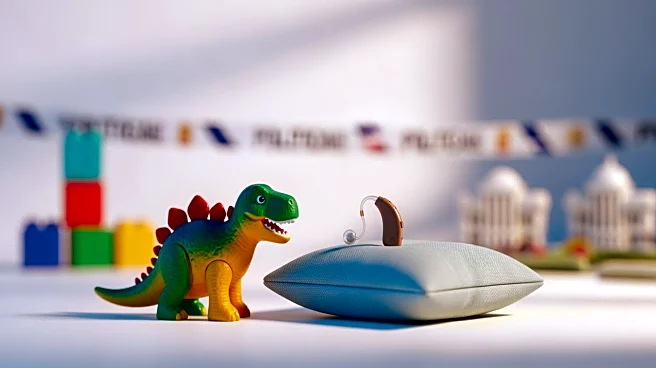
In the upcoming season of the children's cartoon 'Peppa Pig,' Peppa's younger brother George is introduced as moderately deaf. This development is part of Season 11, which will premiere on Nickelodeon on March 23. The storyline reveals George's condition during a doctor's visit where he undergoes a hearing test. Following the diagnosis, George is fitted with a hearing aid, allowing him to experience sound in a new way. Hasbro, the company behind 'Peppa Pig,' has collaborated with the National Deaf Children's Society to ensure an authentic portrayal of deafness. The storyline aims to celebrate diversity and inclusivity, continuing the show's tradition of representing various characters, such as Mandy Mouse, who uses a wheelchair, and Penny Polar
Bear, who has two mothers.
Why It's Important?
The introduction of a character with moderate deafness in 'Peppa Pig' is significant as it promotes inclusivity and representation in children's media. By showcasing George's experience, the show provides visibility to children with hearing impairments, helping them see themselves reflected in popular culture. This move by Hasbro aligns with broader efforts to diversify media content, ensuring that children from different backgrounds and with various abilities feel included. The collaboration with the National Deaf Children's Society underscores the importance of accurate representation, which can foster understanding and empathy among young audiences. This development may influence other media producers to incorporate diverse characters, contributing to a more inclusive entertainment landscape.
What's Next?
Ahead of the Season 11 premiere, an episode of 'Peppa Pig Tales' will be released on YouTube, offering viewers a glimpse into George's perspective. This episode aims to provide insight into the daily challenges faced by individuals with hearing impairments. Additionally, Hasbro has launched a Peppa Pig Sign Language for Kids YouTube channel, featuring episodes in American and British Sign Language. These initiatives are part of a broader strategy to engage with diverse audiences and promote inclusivity. As the storyline unfolds, it will be important to observe audience reactions and the potential impact on children's understanding of hearing impairments.