

What's Happening?
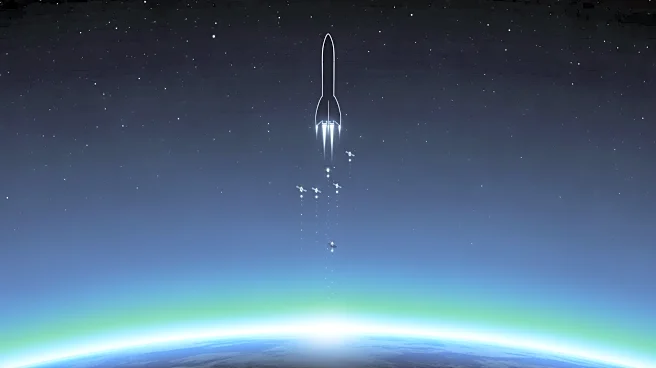
SpaceX, led by Elon Musk, successfully launched a Falcon 9 rocket from Vandenberg Space Force Base early on March 1, 2026. The launch, which took place at approximately 2:10 a.m., was part of SpaceX's ongoing efforts to expand its Starlink satellite network.
The mission involved deploying 25 Starlink satellites into low-Earth orbit. The Falcon 9 rocket's first stage booster successfully returned to Earth, landing on a droneship in the Pacific Ocean about eight minutes after liftoff. SpaceX provided a livestream of the event, allowing viewers to witness the launch and subsequent deployment of the satellites.
Why It's Important?
The successful deployment of 25 additional Starlink satellites is a significant step in SpaceX's mission to provide global internet coverage. The expansion of the Starlink network aims to offer high-speed internet access to underserved and remote areas worldwide, potentially transforming internet accessibility. This launch also demonstrates SpaceX's continued innovation in reusable rocket technology, which could reduce the cost of space travel and satellite deployment. The mission's success reinforces SpaceX's position as a leader in the commercial space industry, potentially influencing future contracts and collaborations with government and private entities.
What's Next?
SpaceX is expected to continue its aggressive launch schedule to further expand the Starlink constellation. Future launches will likely focus on increasing the network's capacity and coverage. The company may also pursue additional regulatory approvals to operate in more countries, broadening its customer base. As the network grows, SpaceX will need to address challenges related to satellite congestion and space debris. The company may also explore partnerships with telecommunications providers to enhance service offerings and integrate Starlink with existing infrastructure.