






What's Happening?
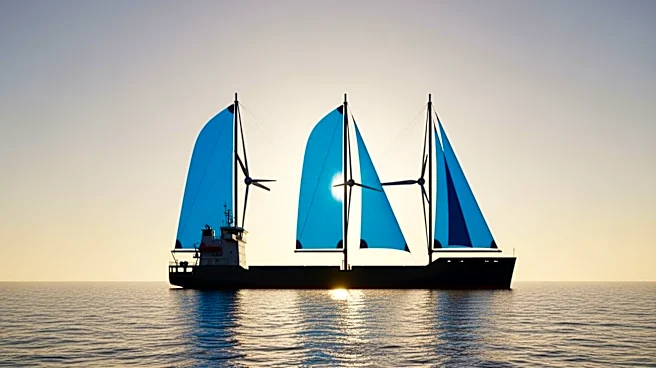
Wind propulsion specialist bound4blue has successfully completed the installation of its suction sail system on the Maersk Tahiti, a tanker operated by Maersk Tankers. This installation, which took place at a shipyard in China, involved fitting four 24-meter
eSAIL units. It is part of a larger agreement to equip five medium-range tankers with a total of 20 units, marking the company's largest single contract to date. The Maersk Tahiti is the second vessel to receive this technology, following the Maersk Trieste earlier in 2026. The suction sails are designed to operate autonomously, aiming to reduce fuel consumption and emissions, thereby improving compliance with environmental regulations.
Why It's Important?
The installation of wind propulsion systems like the eSAIL units on Maersk Tankers represents a significant step towards reducing the maritime industry's carbon footprint. By decreasing fuel consumption and emissions, these systems help shipping companies comply with increasingly stringent environmental regulations. This move not only benefits the environment but also offers commercial advantages by potentially lowering operational costs. The adoption of such technology reflects a broader industry trend towards sustainable practices, driven by both regulatory pressures and the economic benefits of reduced fuel usage.
What's Next?
As bound4blue continues to fulfill its contract with Maersk Tankers, the maritime industry may see increased adoption of wind propulsion technologies. This could lead to further innovations and improvements in the design and efficiency of such systems. Shipping companies might also explore additional renewable energy solutions to enhance sustainability. Regulatory bodies could respond by updating guidelines to encourage or mandate the use of environmentally friendly technologies, potentially influencing global shipping practices.
Beyond the Headlines
The integration of wind propulsion technology in the shipping industry highlights a shift towards more sustainable and innovative solutions. This development could inspire other sectors to explore similar technologies, fostering a culture of environmental responsibility. Additionally, the success of such initiatives may influence public perception, encouraging consumers and stakeholders to support companies that prioritize sustainability. Long-term, this could lead to a more widespread acceptance and implementation of renewable energy solutions across various industries.