



What's Happening?
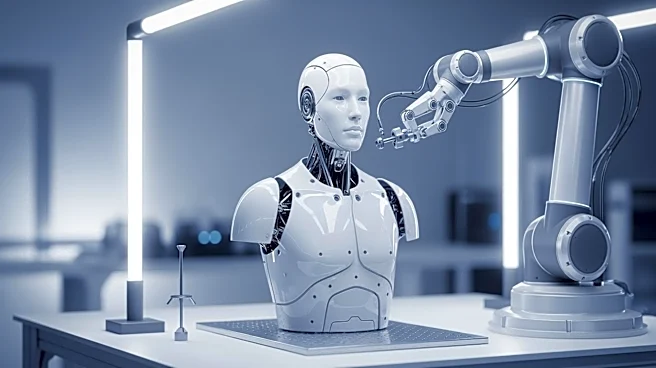
Tesla has announced plans to produce 1 million humanoid robots annually, as detailed in its latest quarterly report. The production will take place in a new factory, replacing the Model S and Model X lines in Fremont, with additional preparations underway
at Gigafactory Texas for a second-generation line. These robots, known as Optimus, are expected to be priced at tens of thousands of dollars each. Despite the ambitious production goals, the capabilities of these robots remain limited, and their high price point raises questions about the target market. Initial sales are intended for Tesla factories and other industrial companies, with consumer sales not expected until the end of 2027.
Why It's Important?
The introduction of Tesla's humanoid robots could significantly impact the robotics and manufacturing industries. If successful, these robots could revolutionize factory operations by automating tasks currently performed by humans. However, the high cost and limited capabilities of the robots may hinder widespread adoption. The move also reflects Tesla's strategic shift from traditional automotive production to advanced robotics, potentially setting a precedent for other companies. The success or failure of this initiative could influence future investments in robotics and AI development.
What's Next?
Tesla's next steps involve completing the construction of the Optimus factory and beginning production. The company will need to demonstrate the robots' capabilities and value to potential industrial clients. As the 2027 consumer sales date approaches, Tesla may face pressure to enhance the robots' functionality and reduce costs to appeal to a broader market. The response from competitors and the broader tech industry will be crucial in shaping the future landscape of humanoid robotics.