



What's Happening?
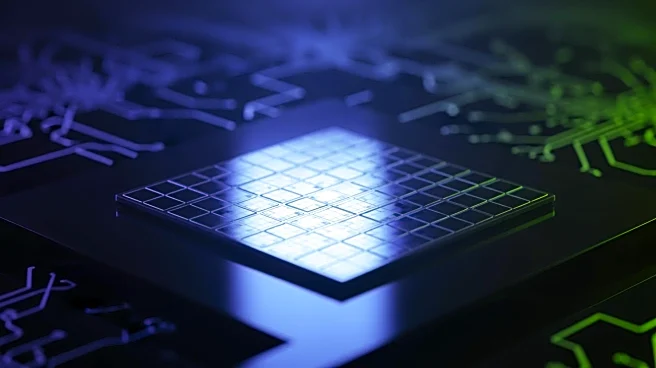
Nvidia CEO Jensen Huang has underscored the critical role of Taiwan Semiconductor Manufacturing (TSM) in the future of AI chipmaking. In a recent interview, Huang highlighted that despite global efforts to diversify chip production, Taiwan remains central to the advanced silicon ecosystem. The U.S. and Europe have been increasing their chip production capacities, but Taiwan's established infrastructure and expertise continue to dominate the industry. Huang's comments come amid a selective market environment where memory stocks like Micron Technologies have seen significant gains due to supply-demand imbalances, while AI-focused companies like Nvidia have experienced sluggish performance.
Why It's Important?
Huang's remarks highlight the ongoing importance of Taiwan
in the global semiconductor supply chain, particularly for AI technologies. This has implications for U.S. and European efforts to bolster domestic chip production, suggesting that these initiatives are more about resilience than replacement. The semiconductor industry is crucial for technological advancements and economic growth, and Taiwan's role as a key player affects global supply chains and market dynamics. Companies relying on advanced chips, such as Nvidia, must navigate these geopolitical and economic landscapes, impacting their strategic decisions and investments.
What's Next?
The semiconductor industry is likely to continue its expansion, with significant investments in chip production across various regions. However, Taiwan's established ecosystem will remain a pivotal part of the supply chain. Companies may focus on enhancing resilience through diversification while maintaining strong ties with Taiwanese manufacturers. The evolving AI market will drive further demand for advanced chips, influencing stock performances and investment strategies in the tech sector.
Beyond the Headlines
Huang's comments also touch on the broader geopolitical implications of semiconductor production. Taiwan's strategic importance in the tech industry could influence international relations and trade policies. As countries seek to secure their technological futures, Taiwan's role may become a focal point in diplomatic discussions, potentially affecting global economic stability and innovation.