


What's Happening?
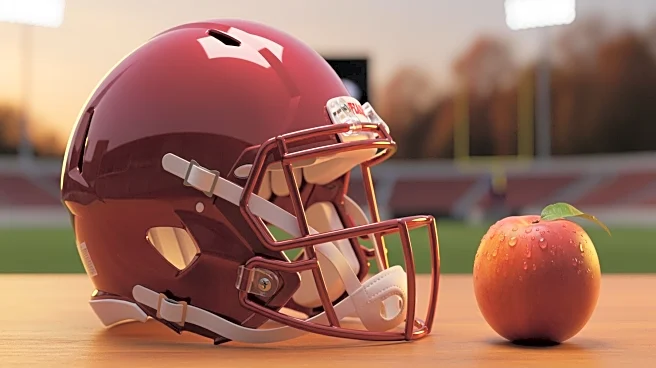
The Indiana Hoosiers football team is set to face the Oregon Ducks in the 2026 College Football Playoff semifinal at the Peach Bowl. This matchup follows a previous encounter this season where Indiana triumphed over Oregon with a 30-20 victory in Eugene. The Hoosiers, under the leadership of Coach Curt Cignetti, have had a remarkable season, remaining undefeated and securing a significant win against Alabama in the Rose Bowl. Indiana's quarterback, Fernando Mendoza, who has been a standout player and Heisman Trophy winner, is expected to declare for the NFL draft. The game is scheduled to take place at the Mercedes-Benz Stadium in Atlanta, Georgia, and will be broadcast nationally on ESPN.
Why It's Important?
This game holds significant importance as it could propel
Indiana to its first national championship appearance, marking a historic achievement for the program. For Oregon, a win would bring them closer to their first national championship victory, a goal that has eluded them despite previous appearances. The outcome of this game could have substantial implications for both teams' future recruiting and program prestige. Additionally, the performance of key players like Fernando Mendoza and Oregon's Dante Moore could influence their positions in the upcoming NFL draft, impacting their professional careers and the teams that may draft them.
What's Next?
The winner of the Peach Bowl will advance to the national championship game, a first for Indiana if they succeed. Both teams will need to strategize carefully, especially Oregon, which faces challenges with key player injuries. The game will also be a critical showcase for NFL scouts evaluating top prospects like Mendoza and Moore. The broader college football community will be watching closely, as the outcome could influence future playoff selections and the perceived strength of the Big Ten and Pac-12 conferences.
Beyond the Headlines
The game highlights the evolving landscape of college football, where programs like Indiana can rise to prominence through strategic leadership and player development. It also underscores the increasing pressure on college athletes who are balancing the demands of collegiate success with the prospects of professional careers. The cultural and economic impact of such high-stakes games extends beyond the field, influencing university branding, alumni engagement, and regional pride.