
What's Happening?
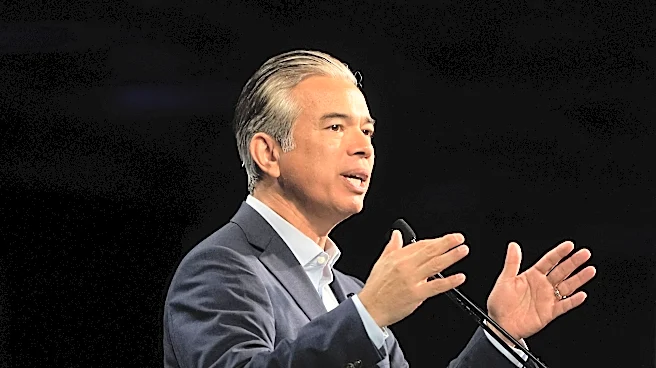
California Attorney General Rob Bonta has accused Amazon of engaging in illegal price-fixing activities, alleging that the company colluded with vendors and retailers to artificially inflate prices beyond
market requirements. Bonta's accusations are supported by evidence, including a memo that purportedly shows Amazon asking Levi's to pressure Walmart into raising the price of its khaki pants to match Amazon's listing price. The case, which highlights Amazon's alleged coercion of sellers into agreements preventing them from offering lower prices elsewhere, is set to go to trial in January 2027. Amazon has responded by dismissing the allegations as a distraction from the case's weaknesses, asserting its reputation as America's lowest-priced online retailer.
Why It's Important?
This legal action against Amazon is significant as it addresses broader concerns about market competition and consumer pricing in the U.S. economy. If the allegations are proven, it could lead to increased scrutiny and regulatory actions against Amazon and similar large retailers, potentially reshaping how e-commerce operates. The case underscores the tension between maintaining competitive pricing and the power dynamics of major online platforms. Consumers could benefit from more competitive pricing if the court rules against Amazon, while the company could face financial penalties and operational changes. The outcome may also influence public policy regarding antitrust laws and corporate practices in the digital marketplace.
What's Next?
The trial scheduled for January 2027 will be a critical juncture in determining the validity of the allegations against Amazon. If the court finds Amazon guilty of price-fixing, it could lead to significant changes in how the company and its competitors conduct business. Stakeholders, including other major retailers and consumer advocacy groups, will likely monitor the proceedings closely, as the case could set a precedent for future antitrust litigation. Additionally, the trial's outcome may prompt legislative bodies to consider stricter regulations on e-commerce practices to protect consumer interests.