



What's Happening?
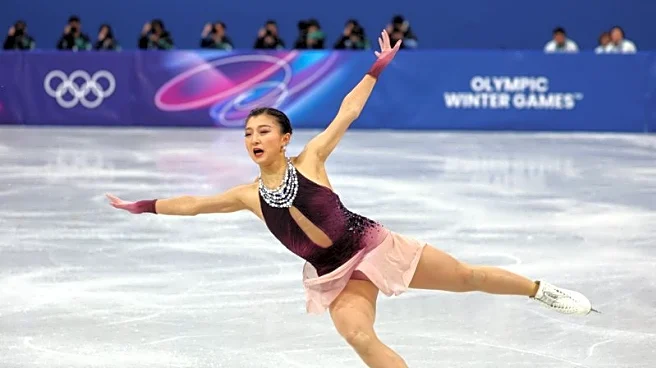
In a dramatic conclusion to the men's individual figure skating competition at the Winter Olympics in Milan, South Korean skater Cha Jun-hwan narrowly missed a podium finish, sparking controversy and criticism of the judging panel. Despite a strong performance in the short program, Cha received lower scores than anticipated, leading to online complaints from fans who felt he was unfairly judged. During the free skate, Cha delivered an impressive routine, overcoming an early fall, but ultimately finished fourth with 273.92 points, just behind Japan's Shun Sato, who scored 274.90 points. The event was marked by unexpected outcomes, including the collapse of favorite Ilia Malinin and the victory of Kazakhstan's Mikhail Shaidorov.
Why It's Important?
The controversy
surrounding Cha Jun-hwan's scoring highlights ongoing debates about the transparency and fairness of judging in figure skating. Such disputes can impact the credibility of the sport and affect athletes' careers, as public perception of bias or inconsistency in scoring can undermine trust in the competition's integrity. For Cha, missing the podium by a narrow margin is a significant setback, especially given his consistent performance and previous Olympic experiences. The incident also underscores the emotional and psychological pressures athletes face in high-stakes competitions, where subjective judging can have profound effects on their professional trajectories.
What's Next?
Looking ahead, the figure skating community may call for a review of judging practices to ensure greater transparency and fairness. Cha Jun-hwan, who has shown resilience and determination throughout his career, will likely continue to compete, with hopes of achieving a podium finish in future events, such as the 2030 Winter Olympics in the French Alps. The controversy may also prompt discussions within the International Skating Union about potential reforms to the scoring system to address concerns raised by athletes and fans.