







What's Happening?
Alphabet, the parent company of Google, has announced plans to sell $80 billion in shares to support its artificial intelligence initiatives. This move has been described as placing the markets in 'unprecedented territory' by Anthony Gutman, co-chief
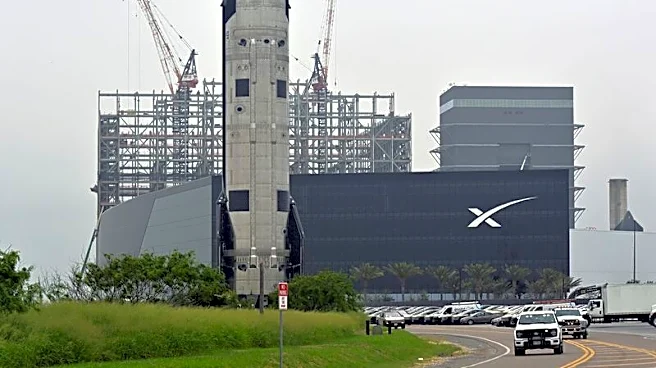
executive officer at Goldman Sachs International. The equity offerings will include a $10 billion allocation to Greg Abel's Berkshire Hathaway, aimed at funding investments in AI compute infrastructure to meet growing customer demand. Goldman Sachs, JPMorgan Chase, and Morgan Stanley are serving as joint book-running managers for these offerings, with Goldman also acting as the placement agent for the private placement. This development comes amid a record year for capital markets, with several mega-IPOs anticipated, including SpaceX's potential historic flotation.
Why It's Important?
The decision by Alphabet to sell such a significant amount of stock underscores the growing importance and investment in artificial intelligence technologies. This move is likely to have a substantial impact on the financial markets, as it reflects a strong demand for equity issuance and highlights the confidence in AI's future. The involvement of major financial institutions like Goldman Sachs, JPMorgan Chase, and Morgan Stanley indicates the scale and significance of this transaction. Additionally, the allocation to Berkshire Hathaway suggests strategic partnerships aimed at bolstering AI infrastructure. This could lead to increased competition and innovation in the tech industry, potentially influencing market dynamics and investor strategies.
What's Next?
As Alphabet proceeds with its stock sale, the financial markets will be closely monitoring the impact on stock prices and investor sentiment. The success of this offering could set a precedent for other tech companies considering similar moves to fund AI and other technological advancements. Furthermore, the anticipated IPOs of companies like SpaceX, OpenAI, and Anthropic later this year could further shape the landscape of capital markets. Stakeholders will be watching how these developments influence market trends and the valuation of tech companies, potentially leading to shifts in investment strategies and priorities.