



What's Happening?
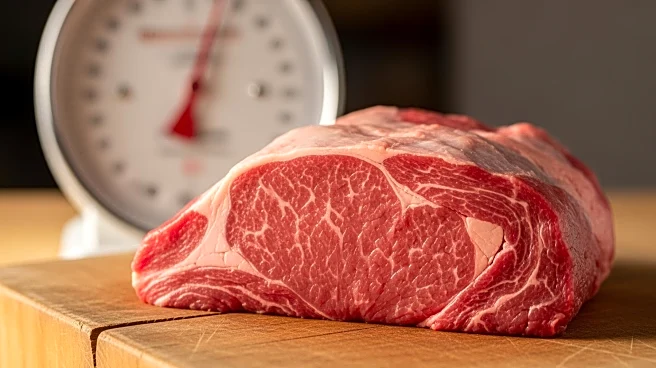
Brazil has overtaken the United States as the world's leading beef producer, according to recent market estimates. This shift comes after Brazil exceeded output forecasts by hundreds of thousands of tons, alleviating a global supply squeeze and helping to moderate a surge in meat prices. Brazil, already the largest beef exporter, shipped nearly $17 billion worth of meat in 2025. Analysts have increased their production estimates, with Brazilian farmers sending more animals to slaughter due to high export demand from countries like China and the U.S. The U.S. Department of Agriculture (USDA) adjusted its estimate for Brazilian beef output to 12.35 million tons, surpassing U.S. production, which fell to 11.8 million tons due to drought conditions.
Why It's Important?
The rise of Brazil as the top beef producer has significant implications for the U.S. beef industry and global meat markets. U.S. consumers are facing record-high beef prices, with the average cost of ground beef reaching $6.821 per pound in December, a 16% increase from the previous year. This price surge contributes to higher grocery costs, impacting consumer spending and inflation. The U.S. beef industry, already challenged by a shrinking cattle herd, may face increased competition from Brazilian exports. The Trump administration's dietary guidelines, which emphasize protein consumption, could further drive demand for beef, exacerbating price pressures.
What's Next?
The U.S. beef industry may need to adapt to increased competition from Brazil by exploring new markets and improving production efficiency. Policymakers might consider strategies to support domestic cattle producers, such as incentives for herd expansion or trade negotiations to ensure fair market access. The USDA's ongoing monitoring of global beef production trends will be crucial in shaping future agricultural policies. Additionally, consumer advocacy groups may push for transparency in pricing and supply chain practices to address affordability concerns.