
What's Happening?
Nissan has announced a strategic shift in its production plans in the United States, opting to manufacture internal combustion engine (ICE) trucks and SUVs instead of electric vehicles (EVs) as previously
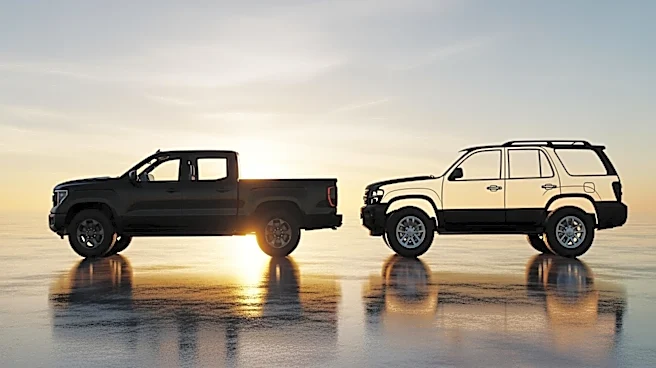
planned. The decision involves producing the Xterra SUV and an updated version of the Frontier pickup truck at its Mississippi factory. This change comes after Nissan initially planned to invest $500 million to produce two EV models in the U.S. The company cited market conditions, customer demand, and an updated strategic direction as reasons for the shift.
Why It's Important?
Nissan's decision to focus on ICE vehicles in the U.S. highlights the complexities and challenges automakers face in transitioning to electric mobility. While global trends favor EV production, Nissan's move suggests that market conditions and consumer preferences in the U.S. may still support traditional vehicle types. This decision could impact Nissan's competitiveness in the growing EV market and influence other manufacturers' strategies. It also raises questions about the pace of EV adoption in the U.S. and the factors influencing consumer choices, such as infrastructure, cost, and vehicle range.
What's Next?
Nissan's strategic shift may prompt other automakers to reassess their production plans and market strategies in the U.S. The company will likely monitor consumer response to its ICE vehicles and adjust its approach as needed. The broader automotive industry may see continued debate over the balance between ICE and EV production, with potential implications for regulatory policies, environmental goals, and technological innovation.