






What's Happening?
The U.S. e-bike market is experiencing significant growth, with an estimated 1.5 million e-bikes sold in 2025 and 2.2 million imported, marking a 29% increase from the previous year. This surge is attributed to the ease of assembling e-bikes from readily
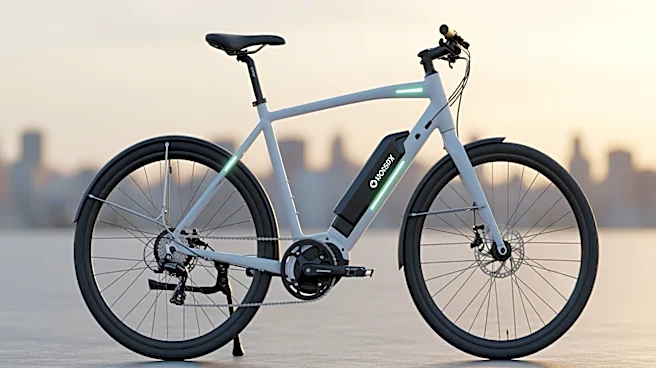
available parts, leading to a proliferation of companies entering the market. Three notable e-bikes currently available include the Heybike Venus, Lauf eElja, and Pedal Electric H/T, each catering to different consumer needs and price points. The Heybike Venus, priced at $1,499, is a commuter bike with a 750-watt motor and an 85-mile range, suitable for urban environments. The Lauf eElja, at $6,990, is a high-end electric mountain bike from Iceland, designed for serious off-road use with a carbon frame and advanced suspension. Lastly, the Pedal Electric H/T, costing $2,250, is a versatile urban bike with a powerful motor and a range of up to 100 miles with an optional auxiliary battery.
Why It's Important?
The expansion of the e-bike market in the U.S. reflects a growing shift towards sustainable and efficient transportation solutions. E-bikes offer an alternative to traditional vehicles, reducing reliance on fossil fuels and contributing to lower emissions. This trend is particularly significant in urban areas where traffic congestion and pollution are major concerns. The diverse range of e-bikes available caters to various consumer preferences, from affordable commuter options to high-performance off-road models, broadening the appeal and accessibility of e-bikes. As infrastructure for cycling improves, particularly in states like California and Texas, the adoption of e-bikes is likely to increase, further supporting environmental goals and enhancing urban mobility.
What's Next?
As the e-bike market continues to grow, manufacturers are expected to innovate further, offering more advanced features and improved performance. Cities may respond by investing in better cycling infrastructure, such as dedicated bike lanes and charging stations, to accommodate the increasing number of e-bike users. Additionally, regulatory frameworks may evolve to address safety and classification standards for e-bikes, ensuring they integrate smoothly into existing transportation systems. The market's expansion could also stimulate competition, driving down prices and making e-bikes more accessible to a wider audience.