
What's Happening?
Nvidia has launched its RTX Spark chip, a 'superchip' designed to integrate AI capabilities into laptops and desktop computers. This development aims to transform personal computers into hyperintelligent
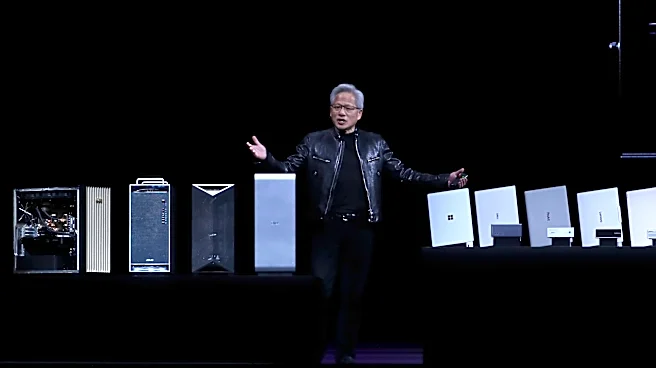
digital co-workers, potentially replacing traditional mouse and keyboard interactions. The chip, developed in collaboration with Microsoft and Taiwan's MediaTek, will run AI agents locally, enhancing autonomy and efficiency. Nvidia's move into the consumer PC industry marks a significant shift from its traditional focus on datacenters, as it seeks to expand its dominance in the AI semiconductor market. The RTX Spark chip is set to be used by major computer manufacturers such as Dell, Lenovo, Asus, and HP.
Why It's Important?
The introduction of the RTX Spark chip represents a pivotal moment in the evolution of personal computing, as it integrates AI directly into consumer devices. This could lead to significant changes in how users interact with computers, potentially increasing productivity and efficiency. Nvidia's expansion into the consumer market could challenge established players like Intel, Apple, and AMD, reshaping competitive dynamics in the semiconductor industry. The move also highlights the growing importance of AI in everyday technology, with potential implications for job creation in software engineering and related fields.
What's Next?
As Nvidia rolls out the RTX Spark chip, the company is likely to face competitive responses from other major semiconductor firms. Intel has announced plans to release its own AI chip, Xe3P, later this year, which could intensify the competition in the AI chip market. The success of Nvidia's new chip will depend on its adoption by consumers and its ability to deliver on the promise of transforming PCs into AI-powered devices. Analysts suggest that while the move is strategically significant, it may take time for Nvidia to establish a strong foothold in the consumer PC market.