





What's Happening?
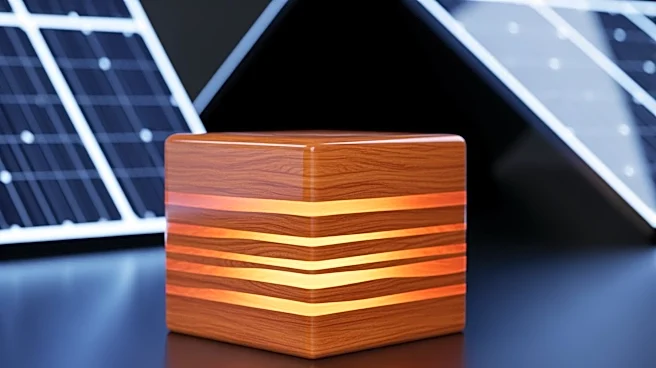
Researchers have developed a new method to store solar energy using engineered wood. By redesigning the internal structure of balsa wood at the nanoscale, they created a material capable of absorbing sunlight, storing it as heat, and generating electricity
even after the light is gone. This innovative approach involves stripping the wood of lignin to increase porosity, coating it with black phosphorene for sunlight absorption, and adding silver nanoparticles to enhance light absorption. The material is durable, efficient, and water-repellent, offering a scalable and environmentally friendly platform for solar thermal energy harvesting.
Why It's Important?
This breakthrough in solar energy storage addresses the fundamental challenge of solar power: its dependency on sunlight. By enabling solar energy to be stored as heat and used even when the sun is not shining, this technology could significantly enhance the reliability and efficiency of solar power systems. It offers a sustainable solution that could be applied to various sectors, including electronics, building materials, and off-grid power systems, potentially transforming the energy landscape.
What's Next?
The researchers aim to scale the system while ensuring desirable energy output. If successful, the technology could be adapted to other nanomaterials and biomass structures, leading to a new generation of solar power systems capable of capturing, storing, and managing energy independently. Further research and development are needed to explore its full potential and applications.
Beyond the Headlines
The use of engineered wood for solar energy storage highlights the potential of natural materials in advancing renewable energy technologies. It also raises questions about the environmental impact and sustainability of such innovations, emphasizing the need for careful consideration of resource use and ecological effects.