




What's Happening?
Global markets are experiencing significant turmoil as the ongoing conflict between the United States and Iran has led to a dramatic increase in oil prices. Brent crude, the international oil benchmark, has risen to $111.23 per barrel, while U.S. West
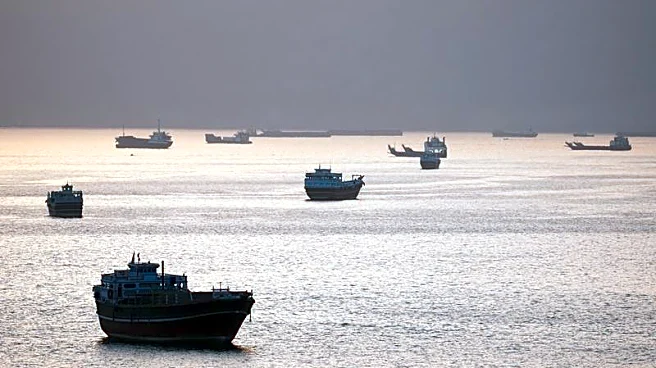
Texas Intermediate has increased to $104.16 a barrel. This surge in oil prices is attributed to the disruptions in the Strait of Hormuz, a critical chokepoint for global oil shipments. Amrita Sen, founder and director of market intelligence at Energy Aspect, warned that the world might be 'sleepwalking' into a major recession due to the underestimation of the oil price shock's impact. The airline industry is particularly affected by jet fuel shortages, and rising gasoline prices are impacting U.S. consumers. Despite OPEC's pledge to increase oil production, the measures are seen as insufficient to counteract the supply disruptions.
Why It's Important?
The escalation in oil prices has far-reaching implications for the global economy, particularly for industries heavily reliant on oil, such as transportation and manufacturing. The increased cost of energy is expected to lead to higher prices for goods and services, contributing to inflationary pressures. This situation poses a significant risk to economic stability, as higher energy costs can reduce consumer spending and slow down economic growth. The potential recession could have severe consequences for employment and investment, affecting millions of people worldwide. Additionally, the geopolitical tensions between the U.S. and Iran could further destabilize the region, impacting global trade and security.
What's Next?
As the situation develops, stakeholders will be closely monitoring the reopening of the Strait of Hormuz and the pace at which oil supply can be restored. Governments and central banks may need to consider policy interventions to mitigate the economic impact, such as adjusting interest rates or implementing fiscal measures to support affected industries. The international community may also seek diplomatic solutions to de-escalate tensions and stabilize oil markets. Businesses and consumers will need to adapt to the new economic realities, potentially leading to shifts in energy consumption patterns and increased investment in alternative energy sources.