


What's Happening?
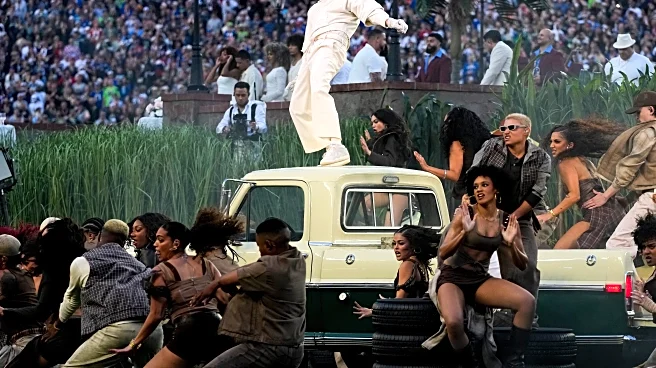
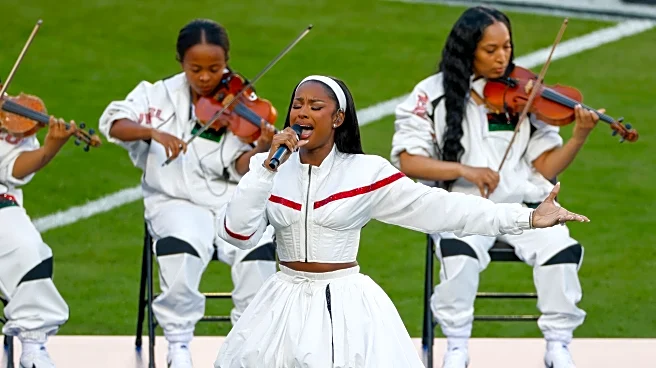
Bad Bunny, the Puerto Rican reggaeton artist, is set to headline the 2026 Super Bowl halftime show at Levi's Stadium in Santa Clara, California. Known for his bold and eclectic fashion choices, Bad Bunny has become a significant figure in both the music and fashion industries. His style, which blends elements of masculinity and femininity, has been described as a celebration of Latin American culture. Over the years, he has collaborated with major fashion labels such as Calvin Klein, Adidas, Jacquemus, and Gucci. His upcoming performance is highly anticipated, with fashion enthusiasts eager to see what he will wear on stage. Bad Bunny's influence extends beyond music, as he continues to challenge traditional gender norms through his fashion choices.
Why It's Important?
Bad Bunny's presence at the Super Bowl halftime show highlights the growing influence of Latin American culture in mainstream American entertainment. His fashion choices, which often defy traditional gender norms, contribute to a broader conversation about inclusivity and diversity in the fashion industry. By headlining such a significant event, Bad Bunny not only showcases his musical talent but also brings attention to the cultural richness of Puerto Rico. His collaborations with high-profile fashion brands further cement his status as a style icon, potentially influencing future fashion trends. This event underscores the importance of representation and diversity in entertainment, as it reflects the changing demographics and cultural landscape of the United States.
What's Next?
As the Super Bowl approaches, anticipation builds around Bad Bunny's performance and his fashion choices. Fashion experts predict that his halftime show attire will be a bold statement, possibly incorporating elements that pay homage to his Puerto Rican heritage. The performance could set new fashion trends for 2026, similar to how previous halftime shows have influenced popular styles. Additionally, the event may spark discussions about the role of Latin American artists in mainstream American entertainment, potentially leading to more opportunities for diverse representation in future high-profile events.