
What's Happening?
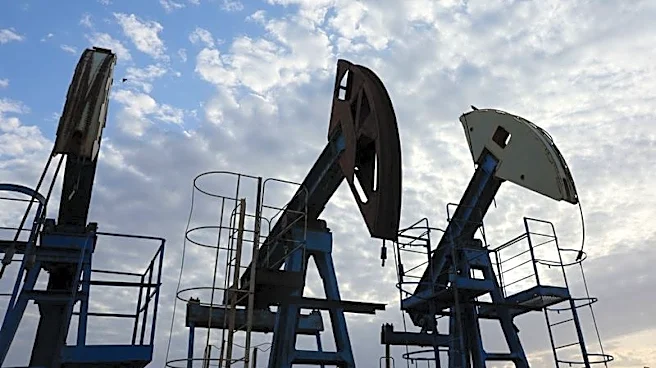
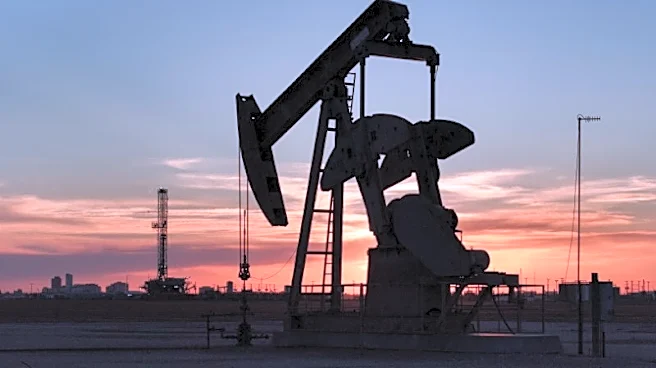
Oil prices have increased as investors express skepticism about a potential breakthrough in peace talks between the United States and Iran. Despite a fragile ceasefire, the conflict has significantly disrupted
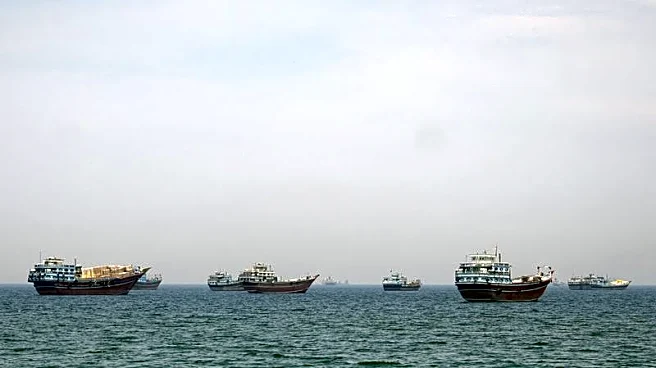
oil flows through the Strait of Hormuz, a critical chokepoint for global energy supplies. The ongoing tensions have led to a depletion of global oil inventories at a rapid pace. Brent crude futures rose by 3.2% to $105.88 per barrel, while U.S. West Texas Intermediate futures increased by 2.6% to $98.88. However, on a weekly basis, both Brent and WTI have experienced declines due to fluctuating expectations regarding a peace deal. The conflict has removed approximately 14 million barrels per day from the market, affecting exports from major oil-producing countries such as Saudi Arabia, Iraq, the United Arab Emirates, and Kuwait.
Why It's Important?
The rise in oil prices amid the US-Iran tensions has significant implications for the global economy, particularly concerning inflation and energy supply stability. The disruption in oil flows through the Strait of Hormuz, which previously accounted for about 20% of global energy supplies, has exacerbated supply shortages and contributed to higher energy costs. This situation poses challenges for countries reliant on oil imports and could lead to increased inflationary pressures. Additionally, the uncertainty surrounding the peace talks and the potential for further conflict escalation could impact future oil price stability and economic growth. The situation underscores the geopolitical risks associated with energy markets and the need for diversified energy sources.
What's Next?
The future of oil prices and global supply stability will largely depend on the outcome of the US-Iran peace talks and the resolution of the conflict. If a peace deal is reached, it could lead to the normalization of oil flows through the Strait of Hormuz, potentially stabilizing prices. However, the head of the UAE's state oil firm ADNOC has indicated that full oil flows may not return until the first or second quarter of 2027, even if the conflict ends soon. Meanwhile, OPEC+ countries are expected to meet on June 7 to discuss a potential modest increase in oil output for July, although delivery remains disrupted by the ongoing conflict. The market will continue to monitor developments in the peace talks and their impact on global oil supply and prices.