

What's Happening?
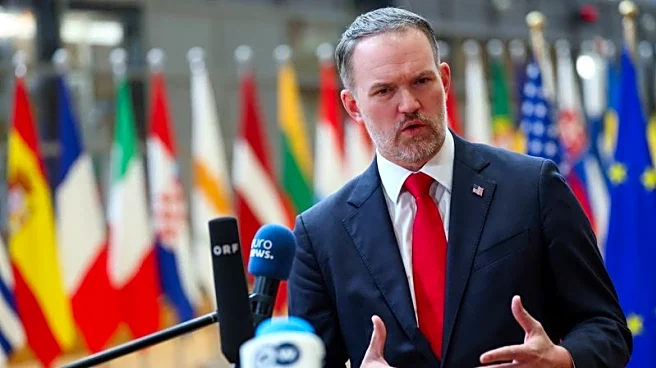
The United States has launched a trade investigation into Bangladesh and several other economies to assess whether their manufacturing practices contribute to global overcapacity, potentially harming U.S. commerce. This investigation, announced by U.S. Trade
Representative Ambassador Jamieson Greer, is conducted under Section 301(b) of the Trade Act of 1974. It aims to determine if the acts, policies, and practices of these economies are 'unreasonable or discriminatory' and whether they 'burden or restrict' U.S. commerce. The countries under scrutiny include China, the European Union, Singapore, and others, with Bangladesh being highlighted for its significant trade surplus with the U.S., particularly in the textiles sector. The investigation will also consider issues such as labor rights, subsidies, and intellectual property rights violations.
Why It's Important?
This investigation is significant as it underscores the U.S. government's efforts to protect its domestic industries from foreign competition that may be benefiting from unfair trade practices. The focus on structural excess capacity and production highlights concerns about overproduction in foreign markets displacing U.S. manufacturing. For Bangladesh, being included in this probe could lead to increased scrutiny and potential tariffs if unfair practices are confirmed. This could impact Bangladesh's export-driven economy, particularly its garment sector, which heavily relies on the U.S. market. The outcome of this investigation could influence U.S. trade policy and its approach to international trade relations, potentially affecting global supply chains and economic partnerships.
What's Next?
The U.S. Trade Representative will open a docket for public comments on March 17, 2026, with a hearing scheduled for May 5. Interested parties are encouraged to submit written comments and appear at the hearing. The investigation will examine whether any of the countries involved have engaged in unfair practices, and if evidence is found, the U.S. may consider imposing additional tariffs. Bangladesh's government, particularly its commerce ministry, is advised to prepare for potential developments in this investigation. The outcome could lead to changes in trade dynamics and necessitate adjustments in Bangladesh's export strategies.