



What's Happening?
MISUMI Group Inc. has announced a strategic partnership with Oishii Farm Corp. to support the latter's vertical farming operations in the U.S. through its subsidiary, Fictiv Inc. This collaboration aims to enhance the agricultural technology sector by
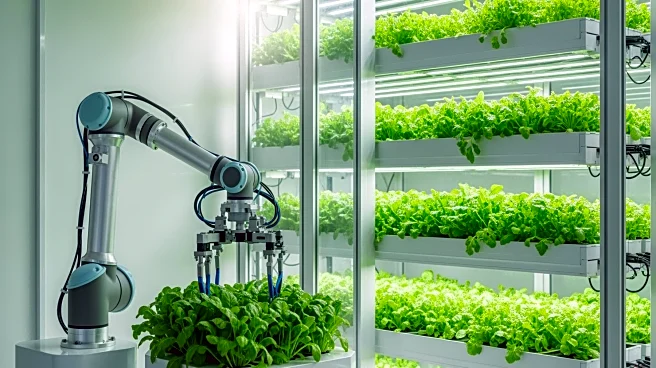
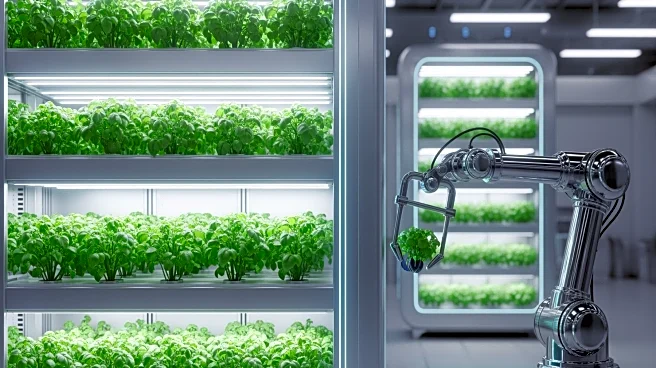
providing mechanical components essential for vertical farms. Oishii, known for producing premium strawberries using vertical farming techniques, integrates advanced technologies such as robotics and digital systems to optimize environmental conditions and automate harvesting. The partnership reflects MISUMI's commitment to sustainable growth in the manufacturing sector, aligning with the Japanese monozukuri philosophy of precision and excellence. Fictiv, with its global manufacturing centers, will ensure a reliable supply chain for Oishii's operations, facilitating the scalability of vertical farming systems.
Why It's Important?
This partnership is significant as it addresses critical challenges in the global food market, such as extreme weather, geopolitical instability, and resource shortages. By leveraging advanced technologies like robotics and IoT, the collaboration aims to improve efficiency, supply chain resilience, and food security. The integration of these technologies in agriculture is crucial, especially in developed economies facing labor shortages. The partnership not only supports the growth of the agritech market but also exemplifies a shift towards sustainable and technologically advanced farming practices. This could lead to increased productivity and stability in food supply, benefiting both the agricultural sector and consumers.
What's Next?
MISUMI and Oishii plan to conduct joint research and development to further enhance agricultural automation. The focus will be on creating components that support the scalability and consistent operation of vertical farming systems in both Japan and the U.S. As the partnership progresses, it is expected to drive innovation in the agritech sector, potentially influencing other companies to adopt similar technologies. The success of this collaboration could lead to broader adoption of vertical farming, contributing to a more sustainable and resilient food production system.