


What's Happening?
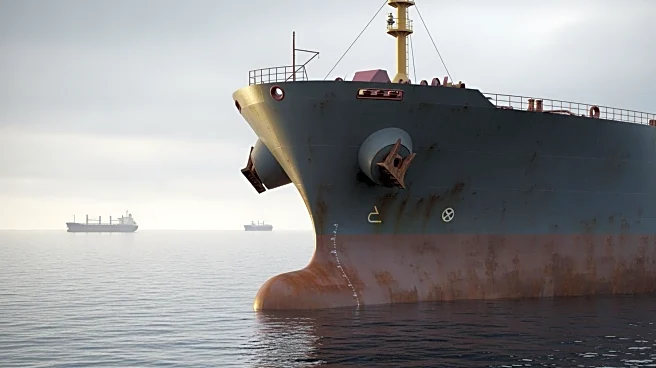
Chevron Corp. has successfully continued its deliveries of Venezuelan crude oil to U.S. ports despite a partial maritime blockade initiated by the Trump administration. According to Bloomberg, at least two vessels chartered by Chevron, including the Searuby and Canopus Voyager, have unloaded their cargoes in the U.S. The Nave Neutrino also off-loaded Venezuelan crude in the U.S. Gulf Coast, although it is unclear if it was chartered by Chevron. Chevron holds a U.S. license to drill and export oil from Venezuela, a country under U.S. sanctions. The White House has intensified efforts to quarantine Venezuelan oil, aiming to cut off revenue to President Nicolas Maduro's government. Despite these tensions, Chevron's ships have not been subject to sanctions and continue to operate
freely, while foreign tankers face delays in nearby waters.
Why It's Important?
The continuation of Venezuelan crude deliveries by Chevron is significant for several reasons. It highlights the complex geopolitical dynamics between the U.S. and Venezuela, particularly in the context of U.S. sanctions aimed at pressuring President Maduro. The ability of Chevron to navigate these sanctions and continue operations underscores the strategic importance of Venezuelan oil in the global energy market. This situation also reflects the broader implications for U.S. energy security and the potential impact on oil prices. As the U.S. seeks to limit Venezuela's oil revenue, Chevron's operations may provide a critical supply line, affecting both domestic and international stakeholders in the energy sector.
What's Next?
Chevron's continued operations suggest that more Venezuelan oil is expected to arrive in the U.S. in January, with the company having sold at least 10 cargoes. The global energy market will be closely monitoring these developments for any signs of supply interruptions. The U.S. government's actions to quarantine Venezuelan oil may lead to further diplomatic tensions and potential retaliatory measures from Venezuela. Additionally, the situation may prompt discussions on the effectiveness and consequences of economic sanctions as a tool of foreign policy.