
What's Happening?
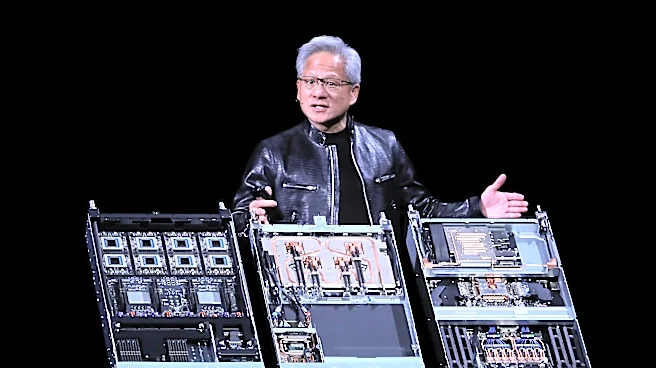
During the Computex event in Taipei, Nvidia CEO Jensen Huang introduced the RTX Spark chip, which aims to bring AI capabilities directly to personal computers. This chip allows AI agents to operate natively
on devices, enhancing tasks such as design and data processing without relying on cloud services. Nvidia's collaboration with Microsoft will see these chips integrated into Windows PCs, marking a significant step in personal computing evolution. The announcement has positioned Nvidia as a formidable competitor to Intel and AMD, whose shares fell following the news.
Why It's Important?
Nvidia's move to integrate AI into personal computers could redefine the PC market, offering users enhanced functionality and efficiency. By enabling local AI processing, the RTX Spark chip addresses privacy concerns and improves performance, potentially setting a new standard for personal computing. This development could lead to increased demand for AI-driven applications, influencing software development and creating new opportunities for tech companies. As Nvidia expands its role from a GPU manufacturer to an infrastructure provider, it underscores the growing importance of AI in shaping future technologies.
What's Next?
The introduction of AI-enabled PCs is likely to spur further innovation in the tech industry, with companies exploring new applications and services that leverage AI capabilities. As Nvidia continues to develop its infrastructure offerings, it may drive advancements in AI research and deployment, influencing sectors such as education, healthcare, and entertainment. The shift towards AI-driven personal computing could also prompt discussions on ethical AI use and data security, as stakeholders navigate the implications of widespread AI adoption.