

What's Happening?
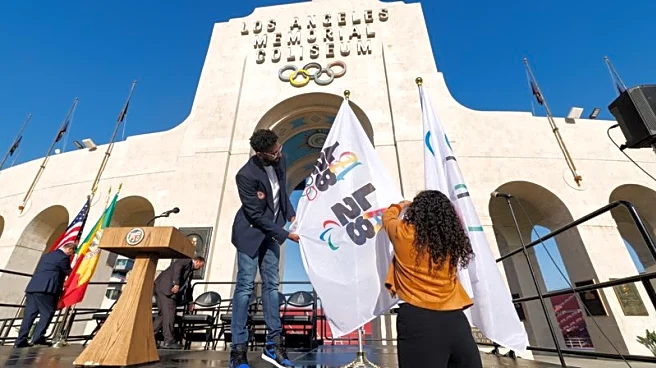
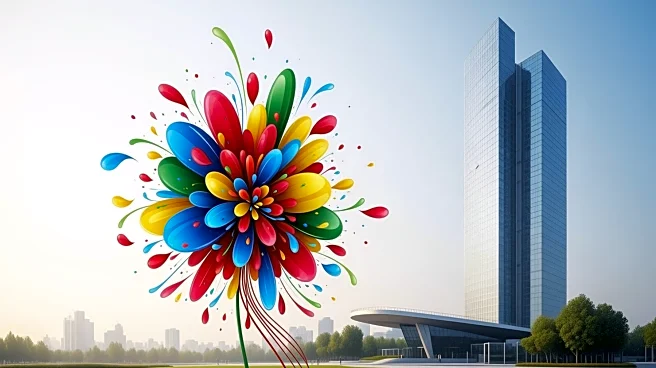
The design for the 2028 Los Angeles Olympics, known as LA28, has been unveiled, showcasing a vibrant and colorful theme inspired by the natural phenomenon of a superbloom. The design team, consisting of 20 designers, drew inspiration from both the exuberant
natural world and the gritty street scenes of Los Angeles. The official 'Look of the Games' features a palette of bright, sun-soaked colors, including shades like 'sagebrush' green, 'poppy', and 'bluebell'. These colors will be used across various Olympic touchpoints, from street signs to merchandise. The typography is inspired by local mini-malls and street art, aiming to reflect the city's dynamic energy. The design rollout comes more than two years ahead of the Games, allowing for further refinement. The LA28 organizers emphasize the importance of early preparation, with the design expected to cover everything from Olympic venues to the yet-to-be-revealed mascot.
Why It's Important?
The unveiling of the LA28 design is significant as it sets the visual tone for the upcoming Olympics, which will be a major international event hosted by Los Angeles. The design not only aims to capture the essence of the city but also to promote a sense of unity and excitement among residents and visitors. The choice of vibrant colors and local-inspired typography reflects a celebration of Los Angeles' diverse culture and natural beauty. This design approach could enhance the city's global image, potentially boosting tourism and local pride. Additionally, the early unveiling allows for ample time to integrate the design into various aspects of the Games, ensuring a cohesive and memorable experience for athletes and spectators alike.
What's Next?
As the LA28 design continues to be refined, organizers will focus on integrating the visual identity into all aspects of the Olympic Games. This includes finalizing the design of the Olympic torch, cauldron, and mascot, as well as ensuring the colors and typography are effectively applied to venues and merchandise. The design team will likely engage with local communities and stakeholders to gather feedback and make necessary adjustments. As the Games approach, promotional activities will ramp up, utilizing the new design to generate excitement and engagement. The success of the design will be measured by its ability to resonate with both local and international audiences, contributing to a successful and impactful Olympic event.