






What's Happening?
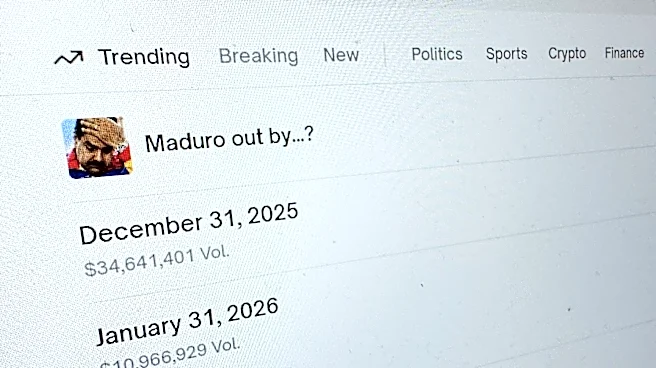
Kalshi and Polymarket, two prominent prediction market platforms, are under scrutiny for insider trading activities. Recent incidents include a U.S. Army soldier using classified intelligence to profit from a prediction market, and federal candidates
engaging in insider trading on their own election races. In response, both platforms have implemented new restrictions to prevent politicians, athletes, and employees from trading on insider information. Economist Robin Hanson argues that insider trading can enhance market accuracy by providing more informed pricing, though this view is controversial among policymakers and the public.
Why It's Important?
The debate over insider trading in prediction markets raises significant questions about market integrity, transparency, and the balance between informed trading and ethical considerations. While some argue that insider trading can lead to more accurate market predictions, others view it as a form of gambling that undermines public trust. The outcome of this debate could influence regulatory approaches to prediction markets and impact their future role in financial and political forecasting.
What's Next?
As scrutiny intensifies, prediction market platforms may face increased regulatory oversight and potential legal challenges. Policymakers could introduce legislation to further restrict insider trading in these markets, similar to existing regulations in traditional financial markets. The platforms themselves may need to enhance their compliance measures and transparency to maintain user trust and avoid legal repercussions. The ongoing discussion will likely shape the future of prediction markets and their acceptance in the broader financial ecosystem.