


What's Happening?
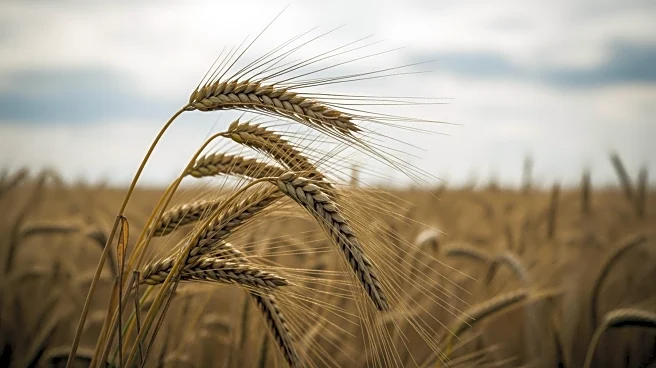
The United States Department of Agriculture (USDA) has revised its 2025 corn production forecast, projecting a record output of 17.02 billion bushels. This increase is attributed to a higher yield forecast of 186.5 bushels per acre and an expansion in harvested acres to 91.3 million. The USDA also reported an increase in domestic corn use, with total domestic use forecasted at 13.17 billion bushels, up 90 million bushels from the previous month. Additionally, the USDA raised the ending stocks for the 2025-26 crop to 2.227 billion bushels, an increase of 198 million bushels from last month. The farmgate price for corn was adjusted upward by 10 cents to $4.10 per bushel. Globally, corn beginning stocks for the 2025-26 crop were increased to 294.7
million metric tons, with global production raised to 1,296.01 million metric tons.
Why It's Important?
The USDA's revised forecast for corn production is significant as it suggests a robust agricultural output, which could stabilize corn prices and impact global food security. The increase in domestic use and ending stocks indicates strong demand and a healthy supply chain within the U.S. agriculture sector. This development is crucial for farmers and agricultural businesses, as it may lead to increased revenue and economic stability. Furthermore, the global increase in corn production and stocks could influence international trade dynamics, potentially affecting export markets and global commodity prices. The adjustments in farmgate prices also reflect the economic conditions faced by farmers, impacting their profitability and decision-making for future planting seasons.
What's Next?
Looking ahead, stakeholders in the agricultural sector will likely monitor the impact of these forecasts on market prices and trade policies. Farmers may adjust their planting strategies based on the revised yield and price expectations. Additionally, international markets will observe how the increased U.S. production affects global supply chains and trade agreements. The USDA's future reports will be crucial in providing updated data and insights into the agricultural landscape, influencing policy decisions and economic strategies within the sector.