
What's Happening?
Doozy Robotics, a Singapore-based company specializing in physical AI robotics, has announced its expansion into the United States, GCC, and Asia. This move is part of the company's strategy to grow its physical AI platform
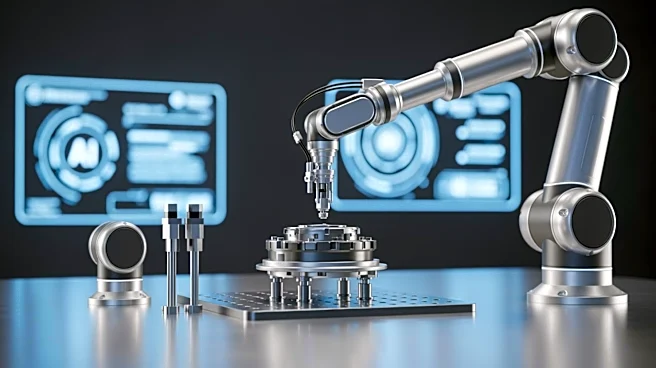
and orchestration technology. Doozy Robotics integrates industrial super humanoids, autonomous mobile robots, and autonomous forklifts, all managed by its proprietary orchestration system, Eywa-OS. This platform acts as a super-intelligent factory manager, overseeing operations, interpreting production goals, and adapting to disruptions. The industrial super humanoid is set to launch later this year, with initial deployments following soon after. CEO and co-founder Suresh Chandrasekar emphasized that the global labor shortage is a structural shift, not a temporary issue, and that Doozy Robotics aims to create a physical AI workforce to drive the next era of manufacturing. The company is also offering a Robot-as-a-Service model, allowing customers to subscribe to an integrated autonomous workforce on a monthly basis, thus transforming factory automation from a capital expenditure to an operational service.
Why It's Important?
The expansion of Doozy Robotics into the U.S. market is significant as it addresses the ongoing global labor shortage by providing scalable autonomous industrial workforces. This development could have a profound impact on the manufacturing industry, enabling facilities to operate more efficiently and intelligently. By offering a subscription-based model, Doozy Robotics lowers the barrier to entry for companies looking to automate their operations, potentially leading to increased adoption of AI and robotics in manufacturing. This shift could result in cost savings and increased productivity for businesses, while also driving innovation in industrial automation. The move also highlights the growing importance of AI and robotics in addressing labor market challenges and the potential for these technologies to reshape the future of work.
What's Next?
Doozy Robotics plans to launch its industrial super humanoid later this year, with deployments expected to begin shortly thereafter. As the company expands its presence in the U.S., it may face competition from other robotics and AI firms looking to capitalize on the same market opportunities. The success of Doozy's expansion will likely depend on its ability to demonstrate the effectiveness and cost-efficiency of its platform. Additionally, the company's Robot-as-a-Service model could attract interest from a wide range of industries beyond manufacturing, potentially leading to further growth and diversification of its customer base. Stakeholders in the manufacturing sector and beyond will be closely watching the rollout of Doozy's technology and its impact on operational efficiency and labor dynamics.