







What's Happening?
The WNBA has reached a historic collective bargaining agreement (CBA) that significantly increases the salary cap by 364% and quadruples minimum salaries. This development marks an unprecedented pay leap in U.S. professional sports, affecting players
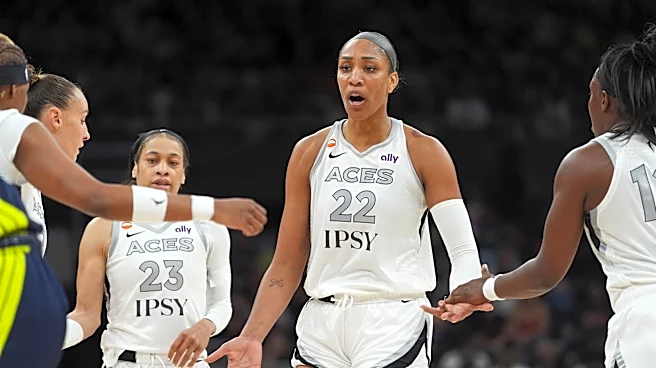
across the board. The agreement not only benefits top stars like A'ja Wilson, who secured a league-record contract, but also supports middle-tier players and under-the-radar talents. The new CBA allows for 'development players' who can join teams without impacting the salary cap. This agreement follows 17 months of negotiations and aims to provide financial stability and growth opportunities for all players. The league's expansion teams, such as the Toronto Tempo, have also been active in building competitive rosters, adding to the excitement of the upcoming season.
Why It's Important?
The new CBA is a landmark achievement for the WNBA, setting a precedent for other professional sports leagues in terms of player compensation and benefits. By significantly increasing salaries, the league is addressing long-standing issues of pay disparity and providing players with financial security. This move is expected to attract more talent to the league and enhance the overall competitiveness of the WNBA. Additionally, the agreement reflects a broader trend towards recognizing and valuing women's sports, potentially influencing other leagues to follow suit. The financial boost could also lead to increased investment in the league, further elevating its profile and popularity.
What's Next?
With the new CBA in place, the WNBA is poised for a season free from labor disputes, allowing players and teams to focus on the game. The increased salaries and opportunities for development players may lead to a more dynamic and competitive league. Teams will likely strategize to maximize their rosters under the new financial structure, potentially leading to more trades and signings. The league's expansion teams, such as the Toronto Tempo, will be closely watched to see how they leverage their new assets and coaching staff to make an impact. The success of this CBA could also prompt other sports leagues to reevaluate their own agreements and player compensation models.