






What's Happening?
DJI Agriculture has released its fifth annual Agricultural Drone Industry Insight Report at Agrishow 2026 in Brazil, highlighting significant environmental benefits from the global adoption of its agricultural drones. By the end of 2025, over 600,000
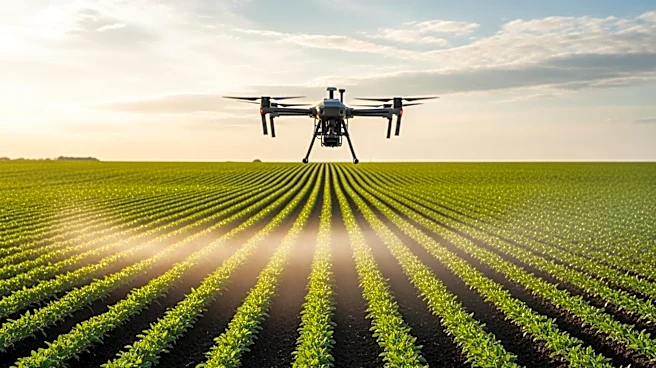
DJI agricultural drones were in use worldwide, operated by more than 600,000 trained individuals. These drones have collectively saved approximately 410 million tons of water and reduced carbon emissions by 51 million tons. The report emphasizes the growing trend towards liberalization and standardization in global drone policies, with DJI expanding its network of service centers and certified instructors to support this growth. The drones are used in over 100 countries, treating more than 300 types of crops, and are particularly prevalent in Brazil for major crops like coffee and soybeans.
Why It's Important?
The widespread adoption of DJI's agricultural drones represents a significant shift towards more sustainable farming practices. By reducing water usage and carbon emissions, these drones contribute to environmental conservation efforts and help mitigate the impacts of climate change. The technology also enhances agricultural efficiency and productivity, offering economic benefits to farmers by reducing the need for resources like water and herbicides. This development aligns with global efforts to modernize agriculture and promote sustainable practices, potentially influencing policy changes and encouraging further investment in agricultural technology.
What's Next?
As the agricultural drone industry continues to mature, DJI plans to further expand its support network and training programs to accommodate the growing number of drone operators. The company aims to provide farmers and policymakers with a clearer understanding of the environmental and economic benefits of drone technology. Future developments may include more precise regulations and guidelines for drone use in agriculture, as seen in countries like Brazil and Canada. These advancements could lead to broader adoption of drones in agriculture, driving further innovation and sustainability in the industry.