
What's Happening?
The 2026 NFL Draft, set to take place in Pittsburgh, is drawing attention to players from non-FBS schools, including those from the FCS, Division II, and Division III. Historically, the majority of NFL draftees come from NCAA Division I Football Bowl
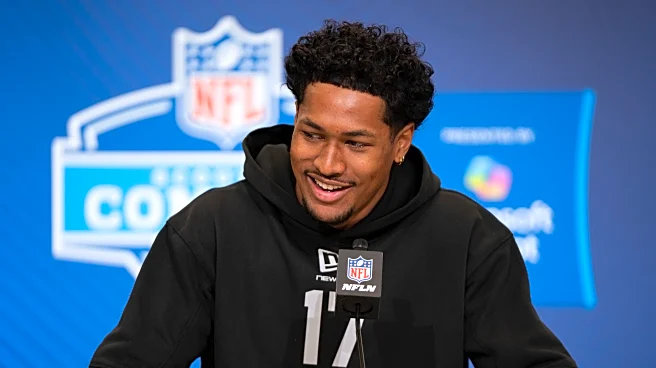
Subdivision programs, with only a small percentage of players from lower divisions making it to the draft. In recent years, the number of FCS players drafted has been minimal, with only eight selected in 2025. Despite these odds, several standout players from non-FBS schools are being highlighted as potential draftees. These include Bryce Lance, a wide receiver from North Dakota State, and Jared Richardson, a wide receiver from Penn, both of whom have had impressive collegiate careers. The draft will feature 257 picks over seven rounds, with the first round beginning on April 23, 2026.
Why It's Important?
The inclusion of non-FBS players in the NFL Draft is significant as it highlights the diverse talent pool available beyond the top-tier NCAA programs. Players from smaller schools often face challenges in gaining visibility, yet they bring unique skills and experiences that can enrich NFL teams. The draft serves as a crucial opportunity for these athletes to showcase their abilities on a national stage, potentially leading to professional careers. For the NFL, tapping into this broader talent pool can lead to discovering hidden gems who may become key contributors to teams. Additionally, the success of non-FBS players in the draft can inspire future athletes from smaller programs, demonstrating that talent and hard work can lead to opportunities at the highest levels of professional football.
What's Next?
As the 2026 NFL Draft approaches, scouts and team representatives will continue to evaluate the prospects from non-FBS schools. These players will have the chance to participate in events like the NFL Combine, where they can further demonstrate their skills and athleticism. The draft itself will be a pivotal moment for these athletes, as being selected can significantly impact their careers. For those not drafted, opportunities as undrafted free agents remain, allowing them to attend NFL camps and potentially secure roster spots. The outcomes of the draft will also influence future recruitment and development strategies for non-FBS programs, as they seek to enhance their visibility and competitiveness in the collegiate football landscape.