
What's Happening?
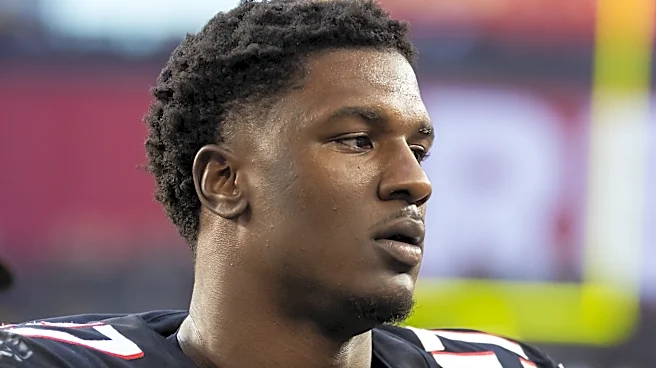
Atlanta Falcons edge rusher James Pearce Jr. has agreed to enter an intervention program, allowing him to avoid trial on several felony charges, including aggravated battery with a deadly weapon, fleeing
police, and resisting arrest, as well as misdemeanor stalking. The charges stem from a February 7 incident in Doral, Florida, where Pearce allegedly rammed his car into a vehicle driven by his ex-girlfriend, WNBA player Rickea Jackson, and subsequently fled from police. Pearce's attorney, Yale Sanford, stated that Pearce must stay away from Jackson and participate in therapy as part of the six-month program. The agreement was reached after consultation with Jackson and law enforcement, with all parties consenting that pretrial intervention was the best course of action. Pearce, who attended the hearing via videoconference, is scheduled to appear in Miami-Dade County Court on May 7 to finalize the details.
Why It's Important?
This development is significant as it highlights the intersection of legal proceedings and professional sports, particularly in how athletes are managed when facing serious legal issues. The intervention program allows Pearce to avoid a potentially lengthy and public trial, which could have impacted his career and the Atlanta Falcons' season. The decision to opt for intervention rather than trial suggests a focus on rehabilitation and mental health, acknowledging Pearce's status as a first-time offender and the incident's roots in a mental health crisis. This case also underscores the NFL's ongoing challenges in addressing player conduct and the league's role in monitoring and enforcing its personal conduct policy. The outcome of this case could influence how similar cases are handled in the future, balancing legal accountability with opportunities for rehabilitation.
What's Next?
Pearce is required to adhere to the conditions of the intervention program, which includes therapy and random drug testing. Failure to comply could result in his removal from the program and potential legal consequences. The NFL is closely monitoring the situation, and Pearce's status with the league remains under review. The Falcons have not commented on the matter, citing the ongoing legal process. The court has also set a permanent injunction hearing for May 21, which will determine the long-term legal restrictions on Pearce's interactions with Jackson. This case may prompt discussions within the NFL and other sports leagues about the support systems available for athletes facing legal and mental health challenges.