
What's Happening?
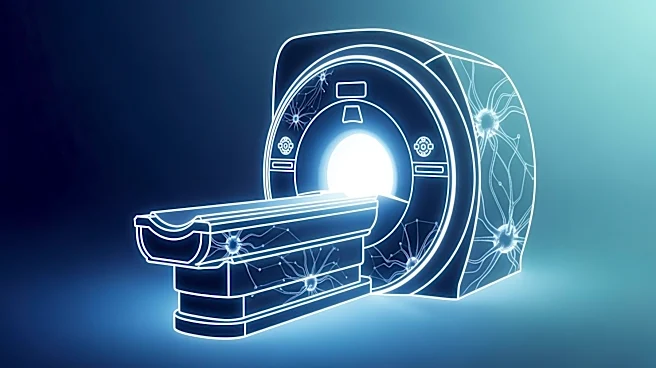
The U.S. Food and Drug Administration (FDA) has granted De Novo classification to Neuropacs, an AI-enabled software designed to assist in the evaluation of Parkinsonian syndromes. This marks the first
time a medical device has been classified under the new category of 'Parkinsonian syndrome diagnostic aid.' Neuropacs analyzes diffusion MRI data to generate reports based on degenerative brain patterns, aiding in the differentiation of multiple system atrophy Parkinsonian variant (MSAp) and progressive supranuclear palsy (PSP) from Parkinson’s disease (PD). The software integrates with standard MRI workflows and is built on over 15 years of research, utilizing more than 1,000 imaging datasets. A multicenter study published in JAMA Neurology supports its efficacy, highlighting its potential to improve clinical decision-making and research applications.
Why It's Important?
The FDA's approval of Neuropacs represents a significant advancement in the diagnostic tools available for Parkinsonian syndromes, which are notoriously difficult to differentiate, especially in early stages. This development could lead to more accurate diagnoses and better-targeted treatments, potentially improving patient outcomes. The integration of AI in medical diagnostics exemplifies the growing trend of leveraging technology to enhance healthcare delivery. For clinicians, this tool provides a new layer of data-driven insights, supplementing traditional diagnostic methods. The broader access enabled by the FDA's classification could accelerate the adoption of AI in neurology, fostering innovation and potentially reducing healthcare costs by streamlining diagnostic processes.
What's Next?
Following the FDA's De Novo classification, Neuropacs is poised to transition from research to commercialization, supported by a recent $1 million seed round. This funding will expand its clinical and trial-support capabilities, potentially leading to wider adoption in medical facilities. As the technology becomes more integrated into clinical practice, it may prompt further studies to validate its effectiveness across diverse patient populations. Additionally, the success of Neuropacs could inspire similar innovations in other areas of neurodegenerative disease diagnostics, encouraging investment in AI-driven healthcare solutions.
Beyond the Headlines
The introduction of AI-based diagnostic tools like Neuropacs raises important ethical and regulatory considerations. Ensuring the accuracy and reliability of AI-generated data is crucial, as is maintaining patient privacy and data security. The FDA's classification sets a precedent for how such technologies are evaluated and approved, potentially influencing future regulatory frameworks. Moreover, the reliance on AI in healthcare could shift the role of clinicians, emphasizing the need for ongoing education and adaptation to new technologies. As AI continues to permeate the medical field, balancing technological advancement with ethical responsibility will be key.