






What's Happening?
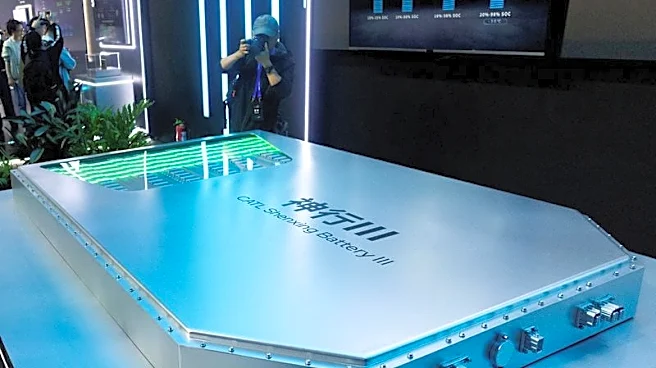
An op-ed published on Mining.com discusses the impact of sodium-ion batteries on the global supply chain, suggesting a shift that may favor China. Dr. Nicholas Vafeas, an economic geologist, argues that while sodium-ion batteries do not outperform lithium-ion
batteries in energy density, they are set to change the strategic value within the supply chain. Unlike lithium, which requires rare geological conditions, sodium is abundant and shifts the bottleneck from mining to manufacturing. China, which controls a significant portion of the sodium-ion manufacturing capacity, stands to benefit from this shift.
Why It's Important?
The shift to sodium-ion batteries could have significant implications for global manufacturing and energy strategies. While Western countries have focused on securing lithium resources, the abundance of sodium means that the competitive advantage will lie in manufacturing capabilities, where China excels. This could lead to a manufacturing monopoly for China, challenging Western strategies that have traditionally focused on mining. The development highlights the need for Western policymakers to adapt their strategies to focus on manufacturing and industrial capacity.
What's Next?
As the sodium-ion battery market grows, Western countries may need to invest in manufacturing capabilities to compete with China's dominance. This could involve developing new industrial policies and infrastructure to support sodium-ion battery production. Additionally, there may be increased collaboration between Western countries to create a more balanced global supply chain. The shift also suggests a need for innovation in battery technology to maintain competitiveness in the energy sector.
Beyond the Headlines
The transition to sodium-ion batteries raises questions about the future of energy storage and the geopolitical implications of supply chain shifts. The reliance on manufacturing rather than mining could lead to new alliances and trade dynamics. Additionally, the environmental impact of increased manufacturing and the potential for new regulatory challenges are areas that may require further exploration.