




What's Happening?
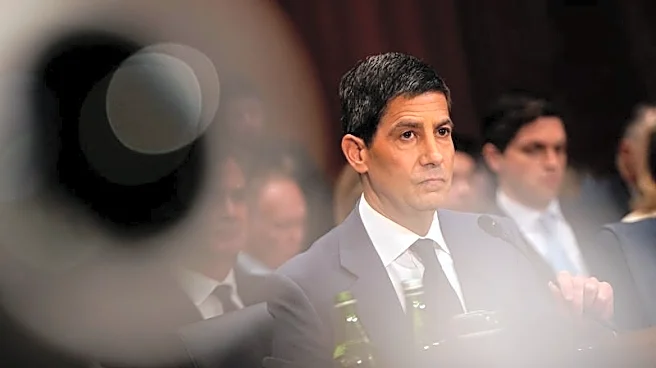
The U.S. Senate has confirmed Kevin Warsh as the new chairman of the Federal Reserve, succeeding Jerome Powell. The confirmation vote was 54-45, with all Republicans and one Democrat, Sen. John Fetterman, supporting Warsh. His nomination faced delays
due to Sen. Thom Tillis's hold, protesting a Justice Department probe into Powell. Warsh, who served on the Fed's board from 2006 to 2011, is known for his stance as an inflation hawk. He takes over at a time when the Fed is divided on interest rate policies amidst rising inflation. The Federal Open Market Committee recently voted 8-4 to maintain the current interest rates, marking significant dissent. Warsh has pledged to maintain the Fed's independence and has proposed changes to how inflation is measured.
Why It's Important?
Warsh's confirmation comes at a critical time for the Federal Reserve, which is navigating complex economic conditions, including a 3.8% inflation rate. His leadership will influence monetary policy decisions that affect the U.S. economy, particularly in managing inflation and interest rates. The Fed's independence has been a contentious issue, with President Trump previously criticizing Powell for not lowering rates. Warsh's approach to inflation measurement could lead to policy shifts that impact financial markets and economic growth. His ability to balance these challenges while maintaining the Fed's autonomy will be crucial for economic stability.
What's Next?
As Warsh assumes his role, he will face immediate challenges in unifying the Fed's board and addressing inflation concerns. His proposed changes to inflation measurement could alter future rate decisions. The Fed's next steps will be closely watched by financial markets and policymakers, as they could signal shifts in economic strategy. Warsh's ability to navigate political pressures and maintain the Fed's independence will be tested, especially with ongoing scrutiny from both political parties.