
What's Happening?
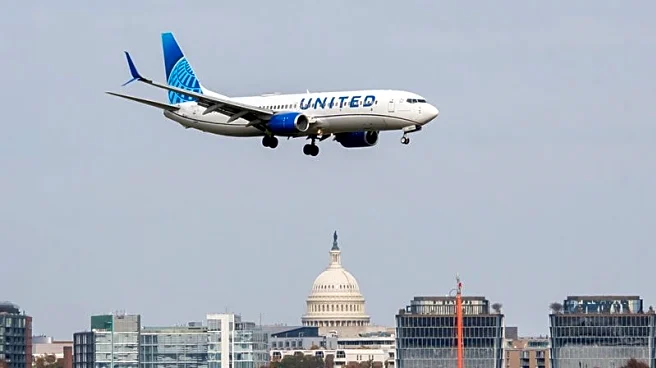
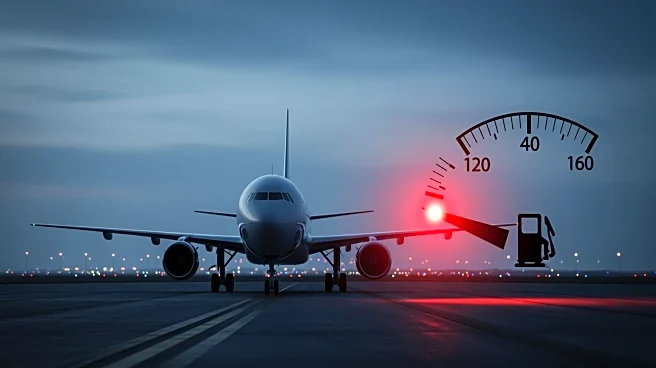
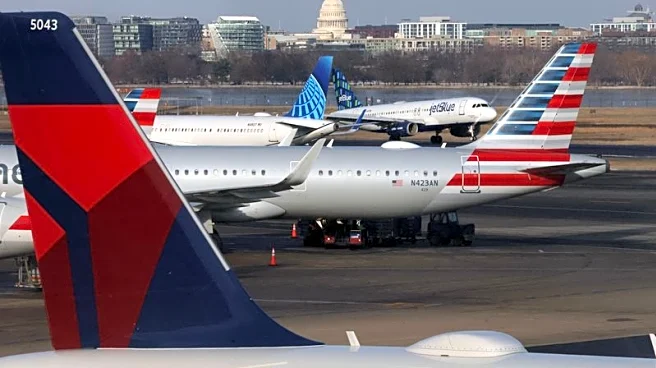
United Airlines has announced a 5% reduction in its flight capacity in response to escalating fuel costs, which have surged following recent military actions in the Middle East. The conflict, involving U.S. and Israeli airstrikes on Iran, has led to retaliatory
attacks on oil infrastructure by Tehran, causing a significant increase in oil prices. United's CEO, Scott Kirby, stated that if current fuel prices persist, the airline could face an additional $11 billion in annual expenses solely for jet fuel. As a result, United is suspending services to certain locations, including Tel Aviv and Dubai, and making other operational adjustments. Despite these challenges, United plans to restore its full schedule by the fall and continue with its long-term expansion plans, including the acquisition of new aircraft.
Why It's Important?
The decision by United Airlines to cut capacity highlights the broader impact of geopolitical tensions on the aviation industry and the global economy. Rising fuel costs can significantly affect airline profitability, leading to increased ticket prices and reduced service availability. This move by United could set a precedent for other airlines facing similar pressures, potentially leading to a ripple effect across the industry. The situation underscores the vulnerability of global supply chains and the interconnectedness of geopolitical events and economic stability. Stakeholders, including passengers, airline employees, and investors, may experience varying degrees of impact, with potential implications for travel demand and airline financial performance.
What's Next?
United Airlines plans to monitor the situation closely and adjust its operations as necessary. The airline aims to resume its full schedule by the fall, contingent on fuel price stabilization. Additionally, United is proceeding with its fleet expansion, expecting to take delivery of 120 new aircraft this year and another 130 by April 2028. The airline's strategy assumes that oil prices may reach as high as $175 per barrel but will not fall below $100 until the end of the following year. United's proactive measures may position it advantageously if fuel prices remain elevated, potentially influencing industry-wide operational strategies.