







What's Happening?
Cryptocurrency markets are experiencing volatility following renewed tensions between the U.S. and Iran. Over the weekend, the U.S. Navy seized an Iranian ship, prompting Iran to reimpose controls on the Strait of Hormuz. This geopolitical tension has
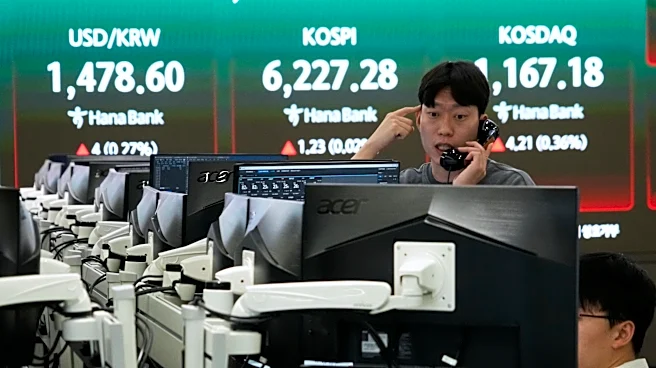
led to fluctuations in various markets. Bitcoin, for instance, traded at $74,335, marking a 1.6% decrease over 24 hours, although it remains up 4.8% for the week. Other cryptocurrencies like Ether and Solana also saw declines, with Ether slipping 2.6% to $2,272 and Solana falling 1.5% to $84. Meanwhile, Brent crude oil prices surged by 5.7% to $95.50 a barrel, and European natural gas futures increased by as much as 11%. The S&P 500 futures fell 0.6% following a record close on Friday, and European equity futures indicated a 1.2% drop at the open. Gold prices fell by 0.8%, while the dollar edged up as investors sought traditional war-hedge assets.
Why It's Important?
The renewed U.S.-Iran tensions highlight the sensitivity of global markets to geopolitical events. The Strait of Hormuz is a critical chokepoint for global oil shipments, and any disruption can significantly impact oil prices and, by extension, global economic stability. The cryptocurrency market's reaction, particularly Bitcoin's, suggests a growing resilience to geopolitical shocks, as the magnitude of sell-offs has decreased with each successive flare-up. This resilience could indicate a maturing market where investors are less reactive to geopolitical headlines. However, the situation also underscores the interconnectedness of global markets, where geopolitical tensions can simultaneously affect commodities, equities, and digital assets. The ongoing tensions could lead to further market volatility, affecting investors and economies worldwide.
What's Next?
As the situation develops, market participants will closely monitor the Strait of Hormuz and any further actions by the U.S. and Iran. The potential for further negotiations or escalations could influence market dynamics. Traders will also watch the U.S. session to see if the 10-year Treasury yield and dollar movements impact Bitcoin prices through the risk-parity channel. If Bitcoin maintains its current levels despite further geopolitical tensions, it could reinforce its emerging role as a geopolitical shock absorber. Conversely, a significant drop below $73,000 could challenge this narrative. The outcome of these tensions will likely influence investor sentiment and market strategies in the near term.