


What's Happening?
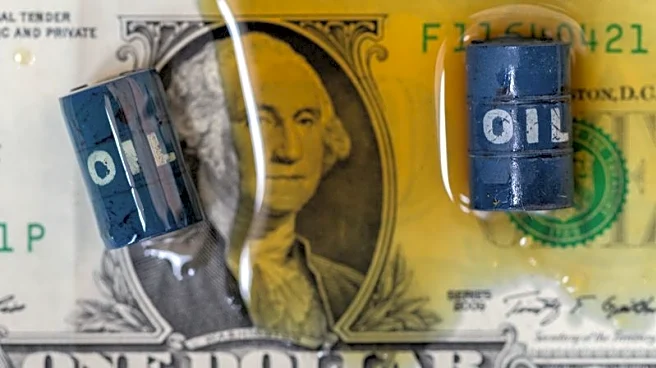
The ongoing conflict with Iran has led to significant economic concerns, particularly regarding inflation in the United States. The closure of the Strait of Hormuz has caused oil prices to surge past $100 a barrel, although they have recently dropped
to around $85 following President Trump's indication that the war might soon end. Despite this, market volatility remains high, and fears of inflation persist. Economists and financial analysts are closely monitoring the situation, as the Bureau of Labor Statistics is set to release new consumer price index data. However, this data will not yet reflect the recent oil price spike. Experts suggest that the impact of rising energy costs will likely become evident in the March inflation report, expected in April. The increase in oil prices is anticipated to affect various sectors, including manufacturing and agriculture, due to energy being a critical input.
Why It's Important?
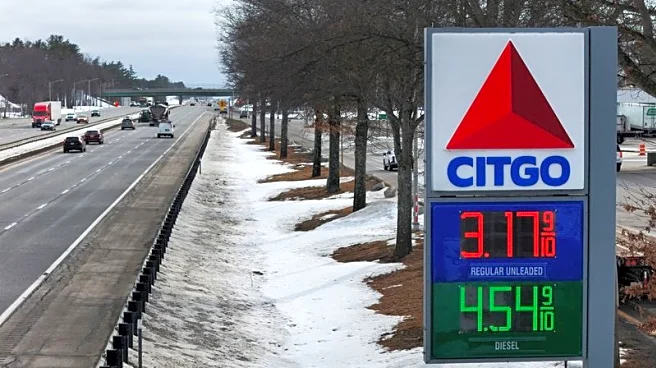
The rise in oil prices due to the Iran conflict poses a significant challenge for the U.S. economy, particularly in terms of inflation. Higher energy costs can lead to increased prices for goods and services, affecting consumer spending and overall economic growth. This situation is especially concerning for lower- and middle-income households, who may have to allocate more of their budgets to fuel expenses. The Federal Reserve faces a complex decision-making process as it balances the need to control inflation with the potential economic slowdown caused by higher oil prices. The duration and scale of the conflict will play a crucial role in determining the long-term economic impact. If the conflict persists, inflationary pressures could continue, complicating the Federal Reserve's monetary policy decisions.
What's Next?
The Federal Reserve will need to carefully assess the situation as new inflation data becomes available. The central bank may have to adjust interest rates to manage inflation, but this decision will depend on the conflict's duration and its impact on oil prices. Economists predict that if oil prices remain high, the Federal Reserve might face pressure to increase interest rates to curb inflation. However, this could also slow down economic growth, creating a challenging environment for policymakers. Stakeholders, including businesses and consumers, will be closely watching the Federal Reserve's actions and the conflict's developments to understand the potential economic implications.