





What's Happening?
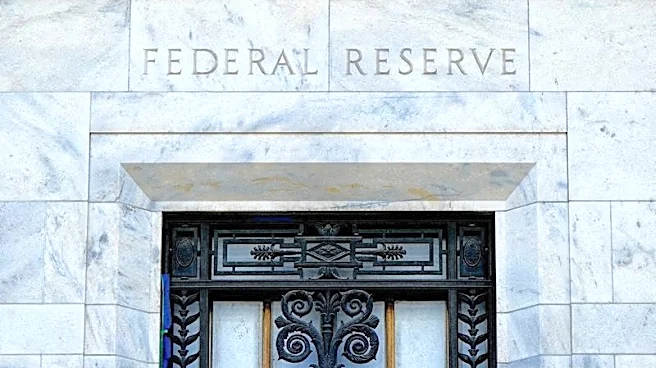
The Federal Reserve is anticipated to maintain its benchmark lending rate between 3.50% and 3.75% during Kevin Warsh's first meeting as Fed chair. This decision comes amidst rising inflation, driven by surging energy prices and ongoing geopolitical tensions,
particularly the U.S.-Israeli conflict with Iran. Despite a majority of economists predicting no rate cuts this year, market traders are pricing in a 67% chance of a rate hike by December, according to the CME Group's FedWatch tool. The potential for a rate hike is influenced by recent data showing U.S. consumer inflation increasing at its fastest pace in three years, largely due to rising energy costs.
Why It's Important?
The Federal Reserve's decision to potentially hold or raise interest rates has significant implications for the U.S. economy. Higher interest rates can curb inflation but also slow economic growth by increasing borrowing costs for consumers and businesses. The anticipation of a rate hike reflects concerns about sustained inflation, which can erode purchasing power and impact economic stability. Additionally, the geopolitical tensions contributing to energy price surges highlight the interconnectedness of global events and domestic economic policy. Stakeholders such as investors, businesses, and policymakers are closely monitoring these developments to adjust their strategies accordingly.
What's Next?
Investors and analysts are awaiting the May producer price index reading to further gauge the Federal Reserve's monetary policy stance. The outcome of Kevin Warsh's first meeting as Fed chair will be pivotal in setting expectations for future rate adjustments. If the Fed signals a potential rate hike, it could lead to increased volatility in financial markets, particularly in sectors sensitive to interest rate changes, such as real estate and consumer finance. Additionally, ongoing geopolitical tensions may continue to influence energy prices and inflation, further complicating the Fed's policy decisions.