



What's Happening?
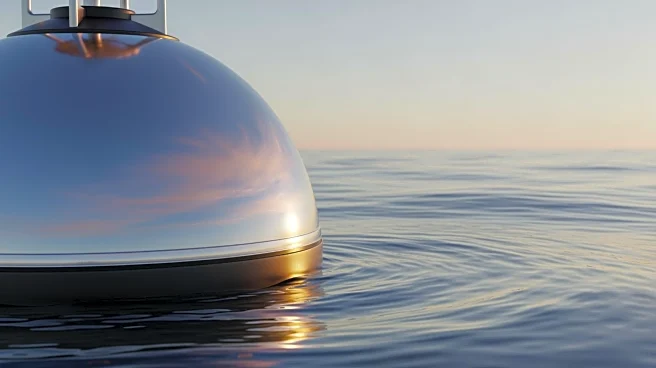
Fred. Olsen 1848 has successfully completed the pilot installation of four automatic Tension Buoy units at the EDP Floating PV Lab, which is Europe's first open-access laboratory dedicated to testing technologies for floating and hydro solar power generation.
The installation took place in a Portuguese dam lake, which experiences water level variations of up to 50 meters, providing a challenging environment for testing the adaptive mooring system. The Tension Buoy's technology is designed to ensure stability and performance for floating photovoltaic (FPV) systems under such conditions. The system's self-adjusting tensioning capability allows it to be tailored to any site, ensuring reliable operation in reservoirs and dams with varying water levels and bathymetry. The installation was completed in five days, highlighting the efficiency of the deployment process. The project was a collaborative effort with EDP, Sperra, and local partners, and included the use of Sperra's 3D-printed gravity anchor to validate new anchoring technologies.
Why It's Important?
This development is significant as it demonstrates the potential for hybrid renewable energy systems that combine floating solar and hydro power. The successful installation of the Tension Buoy units in a challenging environment underscores the adaptability and resilience of this technology, which could lead to more widespread adoption of hybrid renewable systems. Such advancements are crucial for increasing the efficiency and reliability of renewable energy sources, which are essential for reducing reliance on fossil fuels and mitigating climate change. The project also highlights the importance of international collaboration in advancing renewable energy technologies, as it involves partners from different countries working together to achieve common goals.
What's Next?
The pilot installation will continue to operate as a live demonstration for a year, allowing for ongoing testing and validation of the Tension Buoy technology. This period will provide valuable data on the system's performance and adaptability in real-world conditions, which could inform future deployments and improvements. The success of this project may encourage further investment in similar technologies and collaborations, potentially leading to more widespread implementation of hybrid renewable energy systems. Stakeholders in the renewable energy sector, including policymakers, investors, and technology developers, will likely be monitoring the outcomes of this demonstration closely.