






What's Happening?
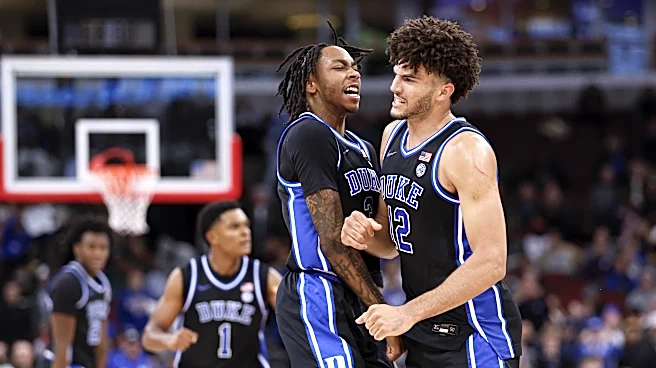
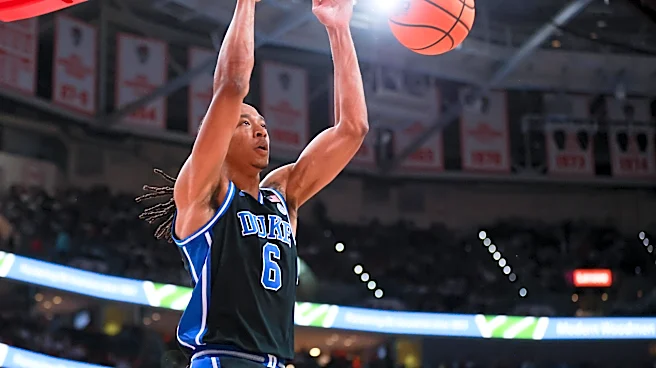
Isaiah Evans, a standout guard for the Duke Blue Devils, has seen his NBA draft stock fluctuate after deciding to remain in the draft rather than return to college. Evans, who significantly improved his performance in his sophomore year, increasing his scoring
average from 6.8 to 15 points per game, is known for his three-point shooting ability. Despite his skills, his draft position has become uncertain, with recent projections placing him as a potential second-round pick. This is a notable drop from earlier predictions that had him as a late first-round selection. Evans' decision to stay in the draft, despite the possibility of a lower selection, highlights the risks athletes face when choosing between professional opportunities and further collegiate development.
Why It's Important?
Evans' situation underscores the challenges and uncertainties faced by college athletes considering early entry into professional sports drafts. His decision to remain in the draft, despite a potential drop in draft position, could impact his career trajectory and financial prospects. For NBA teams, Evans represents a potential asset with his shooting prowess, but his need to develop a more well-rounded game may affect his immediate impact in the league. This scenario also reflects broader trends in college sports, where athletes must weigh the benefits of immediate professional opportunities against the potential for further development and improved draft status through additional collegiate play.
What's Next?
As the NBA draft approaches, Evans will need to demonstrate his value to potential teams through workouts and interviews. His ability to showcase improvements in his game could influence his draft position. For teams like the Sacramento Kings, who have been linked to Evans in mock drafts, his shooting skills could be a valuable addition. However, Evans must also address areas of his game that require development to secure a more favorable draft outcome. The decisions made by Evans and other athletes in similar positions will continue to shape discussions around the balance between collegiate athletics and professional aspirations.