






What's Happening?
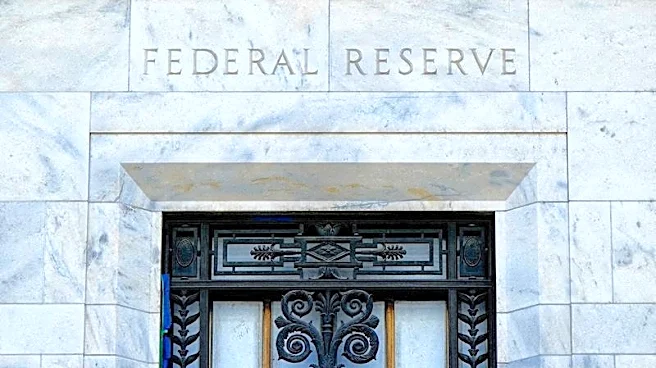
Bank of America has projected that the Federal Reserve will not lower interest rates until the second half of 2027. This prediction is based on the current economic conditions, including strong inflation and resilient job growth. Initially, Bank of America Global
Research anticipated two rate cuts in September and October of this year, influenced by the expectation that Kevin Warsh, President Trump's nominee for Fed chair, would advocate for easing monetary policy. However, the economic landscape has shifted, leading to a revised forecast. The financial firm now believes that the Federal Reserve will maintain its current interest rate policy due to the prevailing economic factors.
Why It's Important?
The decision to maintain interest rates has significant implications for the U.S. economy. High interest rates can affect borrowing costs for consumers and businesses, potentially slowing down economic growth. For businesses, higher rates mean increased costs for loans, which can impact expansion plans and hiring. Consumers may face higher mortgage and credit card rates, reducing disposable income and spending power. The Federal Reserve's stance reflects its focus on controlling inflation, which remains a critical concern. This decision could also influence investor behavior, as stable interest rates might lead to more predictable returns in the bond market, affecting stock market dynamics.
What's Next?
As the Federal Reserve continues to monitor economic indicators, any changes in inflation rates or job growth could prompt a reassessment of interest rate policies. Stakeholders, including businesses and investors, will closely watch for any signals from the Federal Reserve regarding future monetary policy adjustments. Additionally, the nomination of Kevin Warsh as Fed chair could bring new perspectives to the Federal Reserve's approach, potentially influencing future decisions. The economic environment will remain under scrutiny as policymakers balance the goals of fostering economic growth and controlling inflation.