
What's Happening?
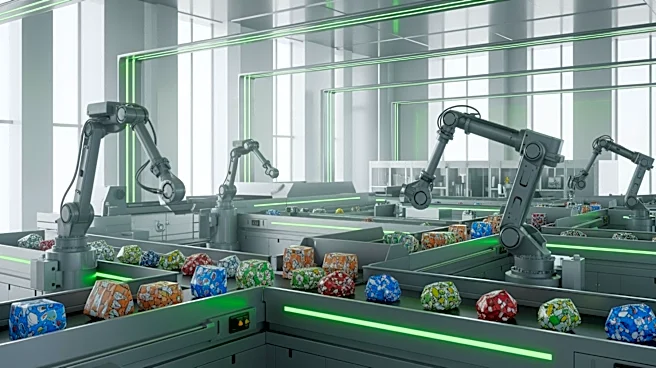
Sortera Technologies Inc. has announced the full operational status of its new processing facility in Lebanon, Tennessee. This facility, powered by advanced artificial intelligence, data analytics, and
sensor technology, aims to transform mixed alloy scrap into high-value materials for industries such as automotive, construction, and aerospace. The Lebanon facility mirrors the capabilities of Sortera's Markle, Indiana site, effectively doubling the company's processing capacity to an estimated 240 million pounds annually. This expansion is part of Sortera's strategy to keep critical materials within the U.S. economy, reducing reliance on international imports. The facility's AI-driven sorting technology is designed to produce high-purity recycled materials efficiently, supporting regional manufacturers with a localized supply chain.
Why It's Important?
The expansion of Sortera Technologies' operations in Tennessee is significant for several reasons. Firstly, it enhances the domestic supply chain for critical materials, reducing the U.S.'s dependency on volatile global markets. This is particularly important for industries like automotive and aerospace, which require a steady supply of high-quality materials. Additionally, the facility's use of AI technology to upcycle scrap metal is a step towards more sustainable manufacturing practices, as it uses approximately 95% less energy than producing virgin aluminum. This contributes to significant carbon footprint reductions, aligning with broader sustainability goals for 2030 and 2040. By providing a localized supply chain, Sortera also reduces transportation emissions and costs, further supporting environmental objectives.
What's Next?
With the Lebanon facility now fully operational, Sortera Technologies is poised to meet increasing demand for sustainable, high-quality recycled materials. The company plans to continue optimizing its high-speed sorting lines to ensure maximum efficiency and minimal environmental impact. As the facility ramps up production, it is expected to play a crucial role in supporting the growth of sustainable manufacturing in North America. Stakeholders, including regional manufacturers and environmental advocates, will likely monitor the facility's performance closely, as it represents a model for future expansions in the recycling and materials recovery sector.