






What's Happening?
Researchers have identified four additional crew members from Sir John Franklin's ill-fated 1845 expedition to find the Northwest Passage. The identification was made through DNA analysis conducted by the University of Waterloo in Ontario, Canada. The newly
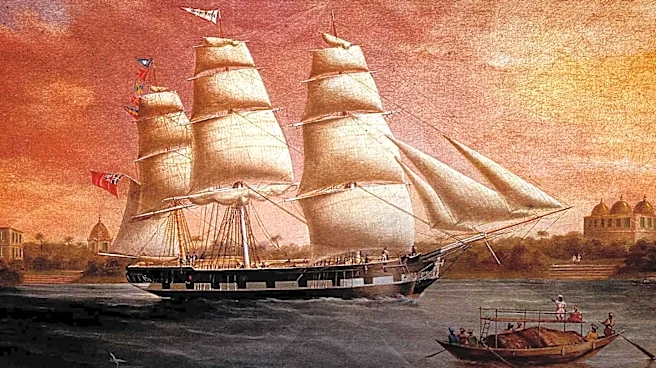
identified remains include William Orren, David Young, John Bridgens, and Harry Peglar. Franklin's expedition, which included 129 officers and crew aboard HMS Erebus and HMS Terror, ended in disaster when the ships became trapped in ice near King William Island. The surviving crew attempted to escape on foot, but none survived. This research adds to the historical understanding of one of the most infamous Arctic tragedies.
Why It's Important?
The identification of additional crew members from the Franklin expedition provides valuable insights into historical maritime exploration and the challenges faced by explorers in the Arctic. This research not only enhances the historical record but also offers closure to the descendants of those who perished. The findings highlight the harsh conditions and risks associated with Arctic exploration, contributing to a broader understanding of the human cost of such endeavors. The study underscores the importance of scientific advancements in DNA analysis, which can uncover new information about historical events and provide a deeper understanding of past human experiences.
What's Next?
Researchers plan to continue working with genealogists and descendants to identify more crew members from the Franklin expedition. Future efforts may include collecting additional archaeological DNA samples to further expand the list of identified individuals. This ongoing research will likely involve collaboration with international experts and institutions to enhance the understanding of the expedition's historical context. The findings may also inspire further studies into other historical maritime disasters, using similar DNA analysis techniques to uncover new information. The continued exploration of the Franklin expedition's legacy will contribute to the broader field of historical and archaeological research.